Here’s What to Look for in Aviation in 2026
Industry expects to build on momentum with another strong year
By Evan Dougherty
Published January 12, 2026
Read Time: 6 mins
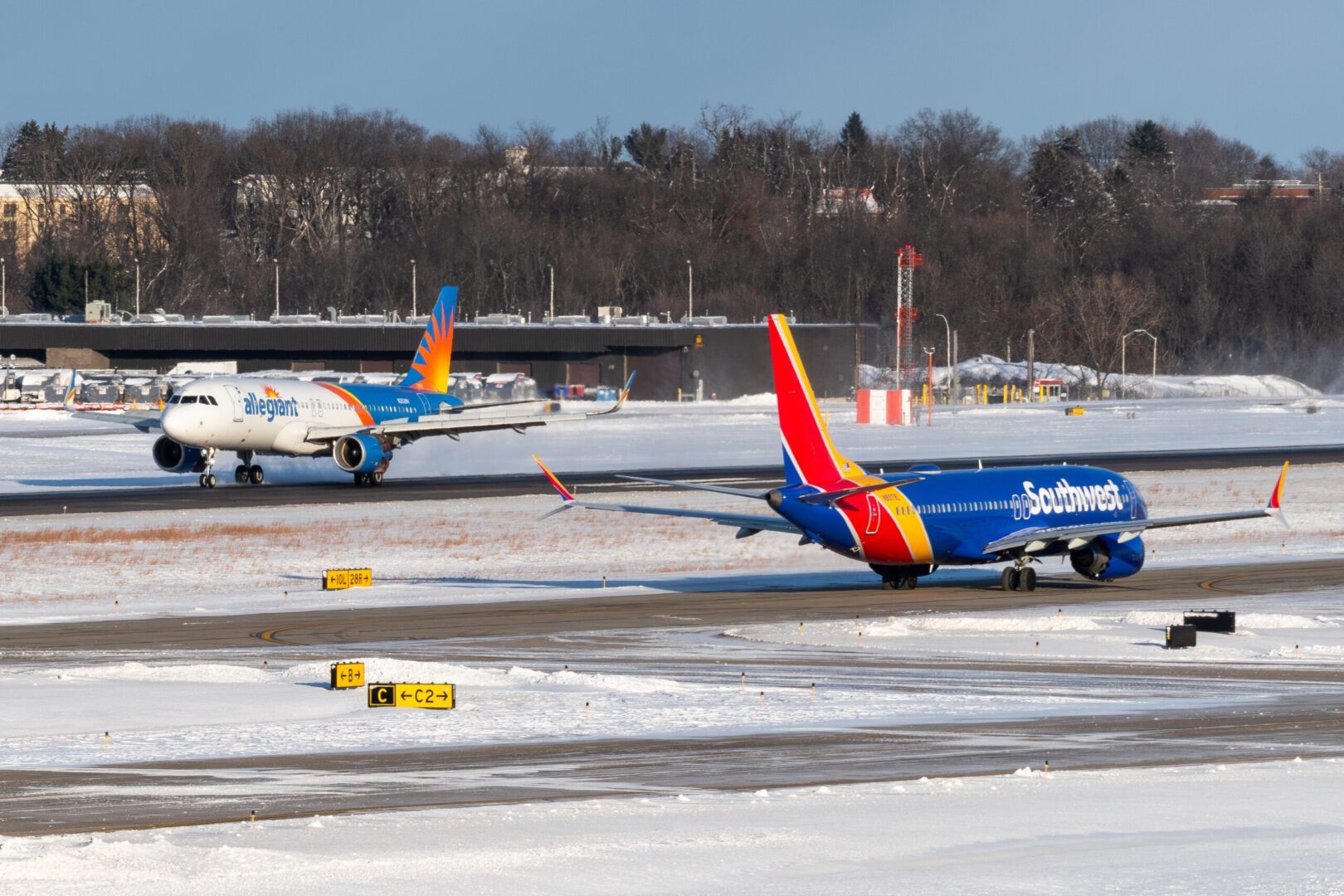
Five years following the start of the global COVID-19 pandemic, aviation has more than roared back.
Despite some lingering challenges, such as supply chain shortages and higher labor costs, 2025 appears to have been a record year for the industry with revenues nearing a record $1 trillion mark, aided by strong demand and stable fuel costs.
With the pandemic mostly an afterthought, the industry is looking to build off its current momentum heading into 2026 highlighted by growth, modernization, competition and sustainability. Here are some of the top stories in aviation heading into the new year.
Another Busy Year for Air Travel
In the U.S., aviation analytics firm Cirium expects passenger demand to remain robust in 2026 supported by continued recovery in international travel and sustained growth in emerging markets. Meanwhile, the International Air Transportation Association (IATA) expects worldwide passenger traffic to grow nearly 5 percent this year.
For cargo, IATA expects nearly 3 percent in growth, noting that air freight is projected to remain robust thanks to AI-driven investment, increasing demand for high-value, time-sensitive goods, and the industry’s shift towards e-commerce.
While airlines look to grow, persistent supply chain bottlenecks have affected deliveries from big manufacturers, including Airbus and Boeing, making demand outpace the supply of planes. Additionally, longer certification times by federal regulators have held up deliveries of aircraft, particularly Boeing’s 737 MAX 7 and MAX 10 narrowbody aircraft.
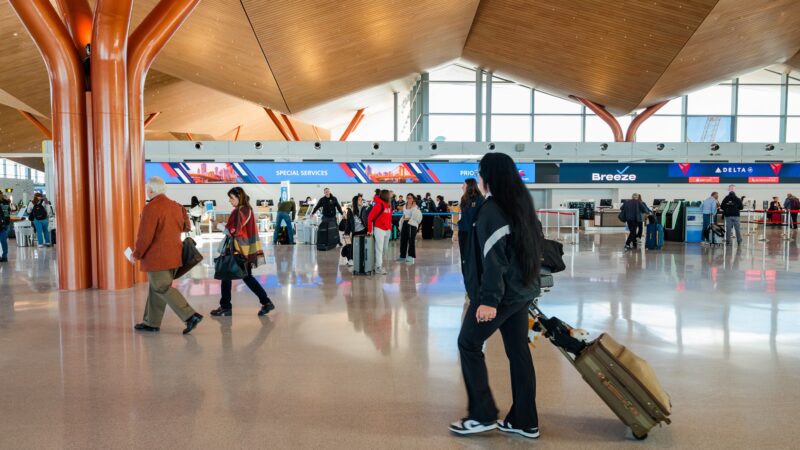
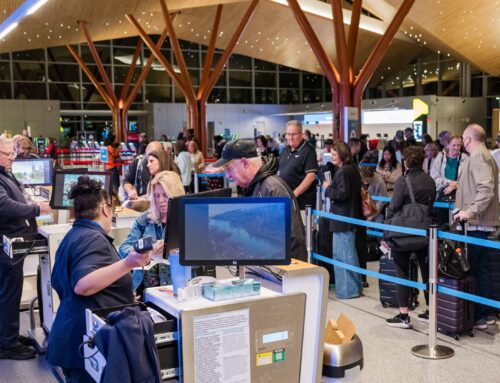
The airline industry expects travel to continue growth in 2026 aided by recovering international travel and sustained growth in emerging markets. (Photo by Beth Hollerich)
ATC Modernization Full Steam Ahead
The U.S. is moving ahead with plans to modernize the nation’s air traffic control network in one of the largest aviation infrastructure projects in decades.
The Federal Aviation Administration is putting forth over $12 billion in Congressional funding towards a full overhaul of the country’s ATC system. According to the FAA, the funding will cover various projects replacing core infrastructure such as telecommunications networks, radar, software and hardware to support modern air travel.
Furthermore, federal funding will go towards increasing the number of air traffic controllers by nearly 8,900 through 2028. Both the FAA and U.S. Department of Transportation have taken measures to increase the hiring process of air traffic controllers while also providing incentives to students and graduates.
In December, the FAA and DOT selected national security firm Peraton to manage the ATC modernization project following a months-long bidding process. Peraton will serve as the project’s prime integrator supporting the FAA to deploy new systems and capabilities throughout the National Airspace System and, “providing centralized leadership to ensure change happens in a coordinated, effective way.”
The initiative is part of the Trump administration’s timeline to complete the overhaul of the nation’s ATC network by 2028 amid growing calls by the industry to replace aging equipment and upgrade air traffic control staffing nationwide to reduce flight delays and improve efficiency of the National Airspace System.
The Race for Premium Customers Accelerates
The hyper-competitive airline industry is about to add eats, lounges and in-flight products in 2026 as airlines battle for premium customers.
Numerous U.S. airlines, including American Airlines, Delta Air Lines and United, plan to add lounges at their respective hub airports in 2026. In addition, banks including American Express, Capital One and Chase, have expanded in the airport lounge space, and each have new locations planned as well.
JetBlue Airways recently opened its first BlueHouse lounge at New York-JFK’s Terminal 5, with a second Boston location coming in 2026. Southwest Airlines also plans to enter the lounge mix; the airline’s CEO Bob Jordan told CNBC in December that the airline is “actively pursuing” a network of airline lounges.
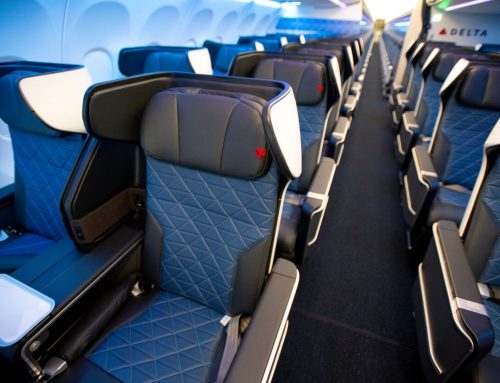
Onboard, U.S. carriers, including American, Delta, Southwest and United, continue to roll out upgraded premium seats, while JetBlue is reportedly exploring plans to introduce domestic first-class seats to much of its fleet in 2026.
Additionally, airlines are introducing faster in-flight connectivity that can be used by passengers at no cost. United and British Airways are adopting Starlink Wi-Fi in the coming years while American and Southwest have introduced free Wi-Fi to members of their frequent flier programs.
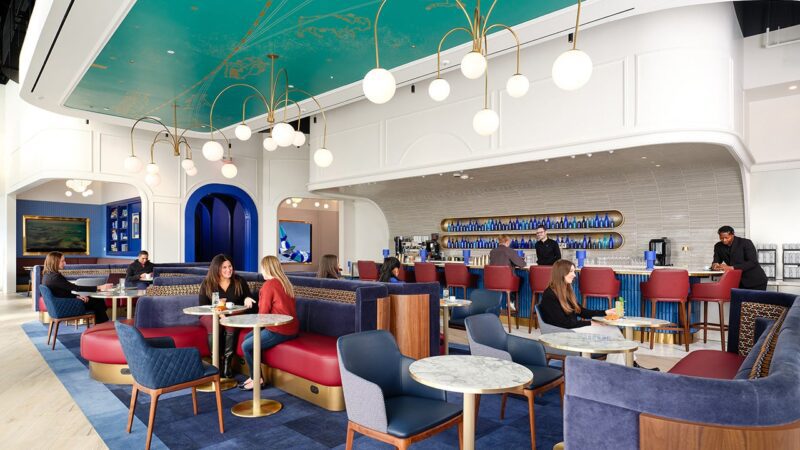
JetBlue recently opened its first ever BlueHouse lounge for its premium travelers at New York-JFK and plans to open a second lounge in Boston later this year. (Courtesy of JetBlue)
Spirit Looks to Build on its Bankruptcy Progress
Spirit Airlines’ ongoing Chapter 11 bankruptcy is being closely monitored by the industry as the airline continues to reorganize for a successful future.
Spirit is in its second bankruptcy filed in August 2025 after reorganizing from November 2024 through February 2025. The airline has faced multiple challenges in the years following the COVID-19 pandemic, which include changing customer preferences, a failed merger attempt with JetBlue challenged successfully by the Department of Justice, global engine shortages causing unplanned groundings of its Airbus A320 family aircraft and rising labor costs.
In its second bankruptcy, Spirit has taken more aggressive measures to organize its balance sheet. The carrier has cut jobs, exited over a dozen airports and has shed nearly half of its Airbus fleet.
In recent weeks, Spirit has reached several milestones with its restructuring plan including an additional $100 million in debtor-in-possession financing from its lenders, adding to the carrier’s $475 million stockpile approved by a bankruptcy court, and an agreement with its pilots and flight attendants unions on an amended labor contract that will further cut costs and aid in the company’s long-term recovery.
Spirit continues to operate normally, including all flights, ticket sales and its frequent flier program, and has maintained its presence at PIT during its two bankruptcies. Under its latest plan, Spirit expects to exit restructuring and become profitable again by 2027 as a standalone airline, while some industry reports have argued that a merger agreement with another airline is also a possible outcome.
American, United Turn 100
American and United have huge birthdays planned for 2026 as both airlines turn 100 years old. While United has not unveiled celebration plans yet, American has revealed how it will recognize its rich history during its centennial.
American has added a new retro jet to its lineup of heritage liveries with a Boeing 777-300ER, registered N735AT, painted to reflect the airline’s “Silver Eagle” color scheme that first appeared on its Douglas DC-3s in the 1930s. In addition, American will unveil a Boeing 737-800 wearing a modified version of its current livery featuring the company’s centennial logo.
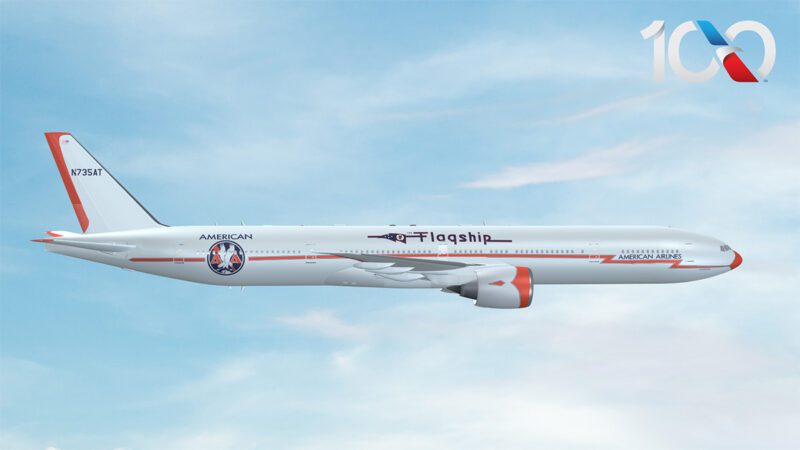
For its 100th anniversary this year, American unveiled a Boeing 777-300ER painted to reflect the airline’s “Silver Eagle” color scheme that first appeared on its Douglas DC-3s in the 1930s. (Courtesy of American Airlines)
Additionally, American is adding its centennial logo decals to its fleet of 1,500 aircraft and has updated its website, social media channels and in-flight entertainment in recognition of the company’s milestone. It has also created a special website paying homage to the airline’s history featuring stories from employees and merchandise available for purchase.
American first took flight on April 15, 1926, using a Robertson Aircraft Corporation DH-4 flying mail between Chicago and St. Louis.
United traces its roots to aviation pioneer Walter T. Varney, who founded Varney Air Lines on April 6, 1926, the first of several subsidiaries controlled by Boeing that merged to form United years later.
American and United’s centennials come after Delta celebrated its 100th birthday in 2025. Delta marked the occasion by painting two newly delivered Airbus A321neo and A350-900 aircraft in special centennial liveries, as well has hosting numerous employee events and unveiling renovations to the Delta Flight Museum in Atlanta.
SAF’s Future
Following a period of growth in 2025, production of sustainable aviation fuel (SAF) is projected to slow down in 2026.
According to IATA’s latest report, SAF output reached nearly 1.9 million tons, almost double the total amount from 2024, but the total figure, “is a downward revision from IATA’s earlier forecasts due to lack of policy support to take full advantage of the installed SAF capacities,” the organization said.
“If the goal of SAF mandates was to slow progress and increase prices, policymakers knocked it out of the park. But if the objective is to increase SAF production to further the decarbonization of aviation, then they need to learn from failure and work with the airline industry to design incentives that will work,” IATA Director Willie Walsh said in a statement.
To address the industry’s growing demand, PIT last year announced a partnership with Avina Synthetic Aviation to develop the first on-airport SAF production facility in the U.S. using an advanced alcohol-to-jet pathway, producing ASTM-certified fuel on airport property with KBR’s PureSAF technology.