Aer Lingus Celebrates 90 Years with Historic Flight
Irish flag carrier re-creates its inaugural route after launching Pittsburgh-Dublin service
By Evan Dougherty
Published June 1, 2026
Read Time: 2 mins
Aer Lingus’ launch of service between Dublin and Pittsburgh on May 25 marked a major milestone not only for the region — its first-ever nonstop connection to Ireland — but also for the airline itself.
The Pittsburgh-Dublin route began service the same week Aer Lingus officially celebrated its 90th anniversary.
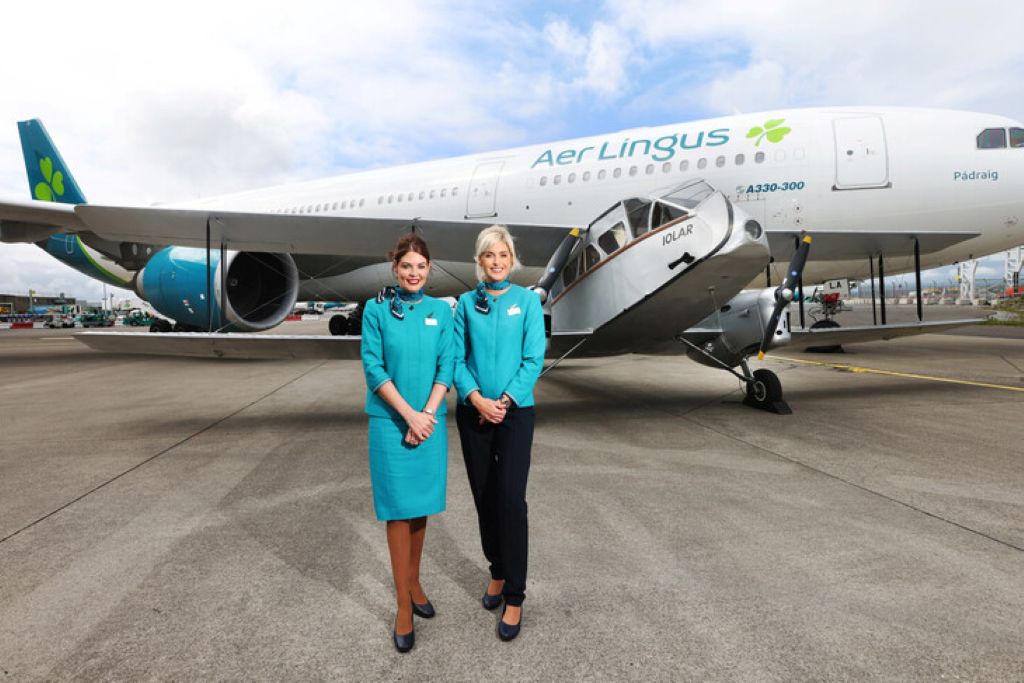
On May 27, the airline commemorated its first flight, 90 years to the day after it launched operations, with a rare 1936 de Havilland DH.84 Dragon aircraft named Iolar — Irish for “eagle” — recreating Aer Lingus’ inaugural passenger flight from Dublin to Bristol, England.
Aer Lingus took to the skies in 1936 as a fledgling government-owned carrier with a single aircraft, a dramatic contrast to today, when the airline serves more than 100 routes from Ireland to Europe and North America.
Iolar is one of the last remaining de Havilland Dragons in the world. The British-built aircraft pioneered short-haul passenger and cargo flights in the U.K., Ireland and Australia. Like many other de Havilland aircraft of the era, the Dragon was constructed out of plywood and fabric that made it lightweight and durable.
The Dragon, flown by a single pilot, could transport between 6-10 passengers and fly up to 109 miles per hour with a maximum range of nearly 460 miles. By comparison, the Airbus A321LR that operates the Pittsburgh-Dublin route seats up to 184 passengers, cruises above 500 miles-per-hour and comfortably crosses the Atlantic with a range of up to 4,600 miles.
Iolar is a meticulously restored sister aircraft to Aer Lingus’ original Dragon, which served the airline for two years before being sold and later lost during World War II.
The present-day Iolar joined Aer Lingus in the 1960s and was restored in 1986 for the airline’s 50th anniversary. The aircraft was re-registered as EI-ABI, carrying the same registration as the original aircraft.
Until this year, Iolar had been a static display aircraft housed inside Aer Lingus’ maintenance base at Dublin Airport. To return the aircraft to airworthy condition for the commemorative Dublin-to-Bristol flight, Iolar underwent a four-month restoration carried out by Aer Lingus volunteers and mechanics from Midland Aviation.
The restoration team used archival research, engineering expertise and traditional craftsmanship to return Iolar to flying condition while preserving its structural integrity and historical authenticity. Work included maintenance and certification inspections, including overhauls of both engines, and extensive cosmetic restoration of the airframe. In addition, the team turned to the expertise of one of Ireland’s last aviation carpenters who also played a vital role in maintaining the aircraft’s authenticity.
“The restoration of Iolar is a powerful way for us to reconnect with the very beginnings of our airline 90 years ago and the pioneering spirit that shaped Irish aviation,” Aer Lingus CEO Lynne Embleton said in a statement. “I am incredibly proud of the dedication and expertise shown by our colleagues and partners in bringing Iolar back to life, preserving an important piece of our history for future generations.”
Iolar’s restoration was supported by the Aer Lingus Charitable Foundation, which is dedicated to preserving Ireland’s transportation and industrial heritage.