
Where the Airport of the Future Becomes the Classroom for Today
PIT is becoming a real-world laboratory for the next generation of aviation leaders, partners with CU Denver’s Executive MBA in Aviation
By Blue Sky Staff
Published August 24, 2026
Read Time: 4 mins
For aviation executives, the most important question facing the industry may not be what comes next, but who will lead it there.
Airports are evolving from infrastructure providers into increasingly complex enterprises, balancing airline partnerships, passenger expectations, technology, corporate and community interests and long-term capital investments. At the same time, airlines and airports are navigating a workforce transition that makes developing the next generation of leaders an increasingly strategic priority.
That is the backdrop for a new partnership between the Allegheny County Airport Authority (ACAA) and the University of Colorado Denver’s Executive MBA in Aviation (EMBAA), which will bring the program’s inaugural cohort to Pittsburgh International Airport (PIT) for a week-long immersive residency in May 2027.
Rather than studying airport management exclusively from a classroom, the cohort will examine it from inside an operating airport by meeting with ACAA senior leaders, including CEO Christina Cassotis, and exploring PIT’s approach to operations, partnerships, people, purpose and how that helps to drive economic growth for the region.
The idea reflects a broader shift in how aviation leadership is being developed: less theory in isolation, more exposure to the decisions and trade-offs that shape the industry every day.
“Airports are more than transportation hubs. They are critical economic engines and places of connection for their communities,” Cassotis said. “We are excited for the opportunity to share this perspective, showcase our innovative, modern terminal, and provide insights about our transformation here at PIT with future aviation leaders from the University of Colorado Denver.”
Turning airports into classrooms
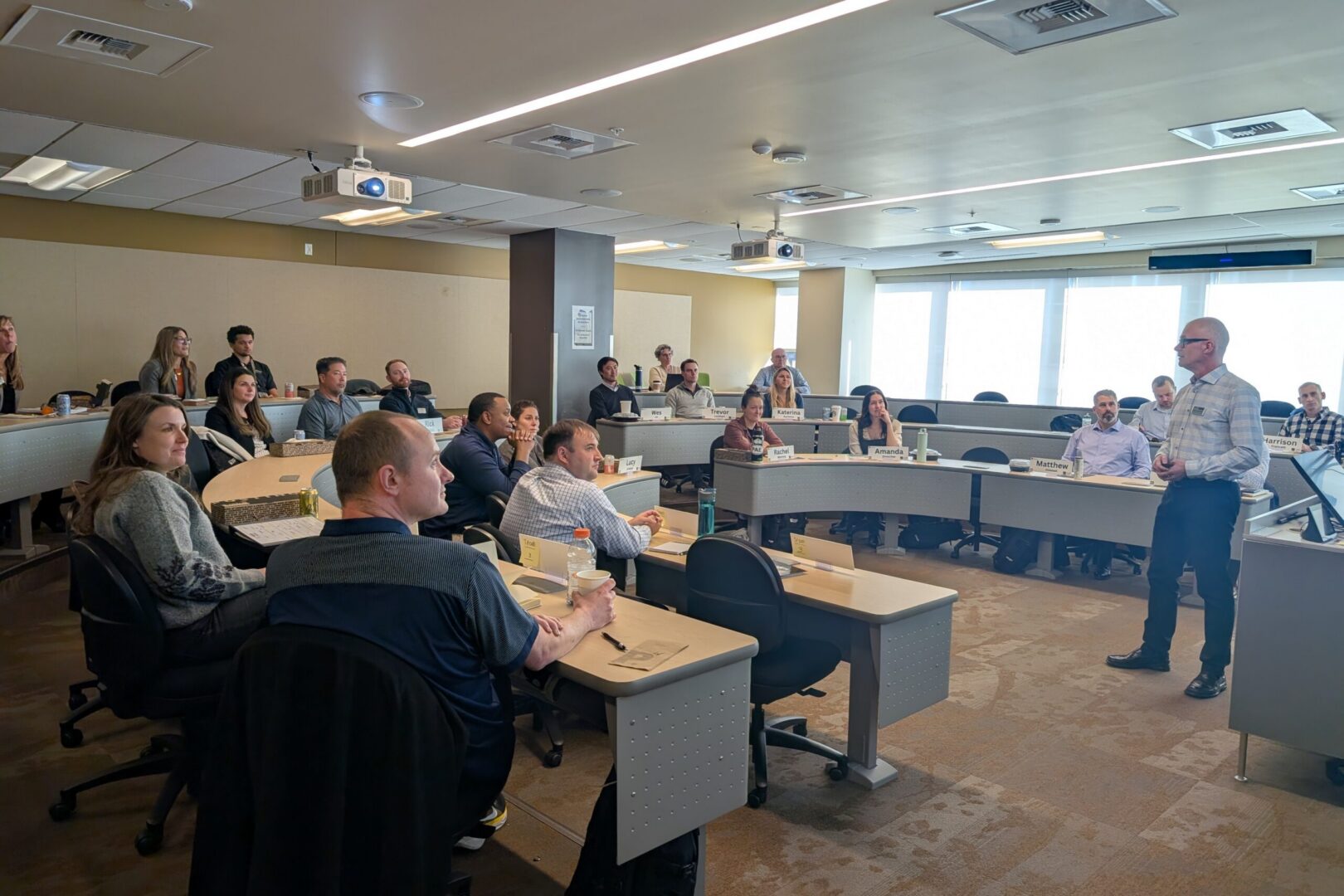
The EMBAA program is an 18-month hybrid degree designed for working professionals. Based at Denver International Airport for its in-person classes, the program combines the core business disciplines of an Executive MBA with an industry-specific curriculum covering the aviation ecosystem.
That includes airline planning, airport management, stakeholder partnerships, crisis management, aviation security and strategic leadership.
But perhaps the program’s most distinctive element is its use of airports themselves as learning environments.
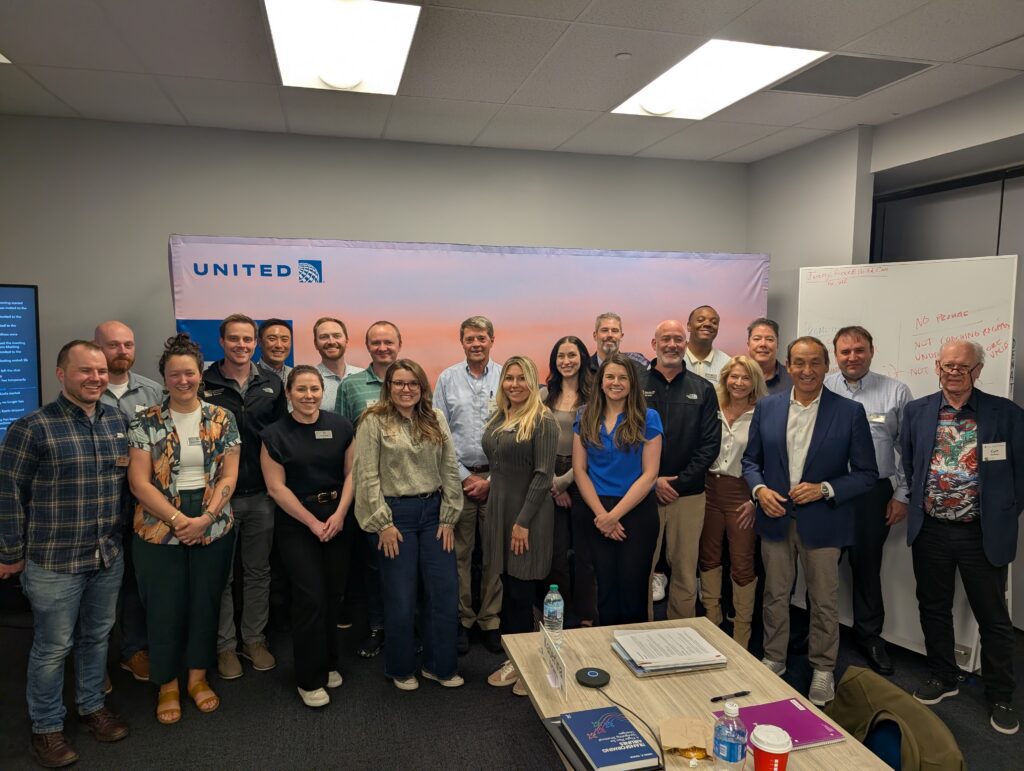
Students from cohort 1 of the CU Denver Executive MBA in Aviation during an in-person class at a United Airlines office with former United chairman and CEO Oscar Munoz at Denver International Airport. (Courtesy of CU Denver Executive MBA)
Students in the first cohort will complete three week-long residencies at major airports in the United States and abroad. The itinerary begins at Munich Airport in October 2026, followed by Ontario International Airport in March 2027 and Pittsburgh International Airport in May 2027.
For executives, the value is in the context. A classroom can teach the principles of strategy or organizational leadership. An operating airport allows students to see how those principles collide with real-world constraints, including infrastructure, airline schedules, passengers, regulators, employees, communities and capital investment.
“Programs at this level only work if they are closely tied to the industries they serve,” said David Chandler, associate dean of Executive Programs at the CU Denver Business School. “At a time when universities are being asked to demonstrate their value to society more explicitly,” that connection has become even more important.
A different kind of aviation leadership pipeline
The partnership also points to a challenge that extends well beyond Pittsburgh or Denver: how does the aviation industry prepare leaders who understand the entire ecosystem rather than a single segment of it?
Airline executives routinely make decisions that depend on airport capacity, passenger flows, technology, government policy and regional economic conditions. Airport leaders, meanwhile, increasingly need to understand airline economics, customer expectations and the competitive dynamics that determine where carriers invest.
The EMBAA is designed around that interconnectedness.
Its faculty brings together aviation executives, journalists and academic leaders, including former United Airlines Chairman and CEO Oscar Munoz; former CU Denver Chancellor Emerita and Business Professor Michelle Marks; aviation and transportation journalist Edward (Ned) Russell; and Scott McCartney, former Wall Street Journal columnist and host of Airlines Confidential, who teaches the program’s History of Aviation course. (Cassotis is a frequent co-host of McCartney’s on the podcast.)
McCartney sees the program as filling a longstanding gap in aviation education.
“The engagement and commitment and growth of Cohort 1 have been dazzling,” he said. “This program is one of a kind and has been sorely needed for decades.”
Why the Pittsburgh residency matters
For PIT, the partnership offers more than an opportunity to showcase a new terminal or an airport transformation. It provides a chance to expose future aviation leaders to a different model of what an airport can be, and to the organizational thinking required to make that model work.
The ACAA will work with CU Denver on academic content, tours and other learning experiences tailored to Pittsburgh’s expertise.
That creates a two-way exchange. Students gain access to executives confronting complex aviation challenges in real time, while the airport has an opportunity to articulate and examine the strategies behind its own transformation.
For an industry increasingly defined by partnerships and interconnected systems, that may be the most valuable lesson of all.
The aviation leaders emerging from programs such as EMBAA will not simply need to understand how an airline, airport or other aviation business operates. They will need to understand how the pieces work together and how to lead when the interests of those pieces do not always align.
That makes the Pittsburgh residency more than a field trip.
It is a glimpse at how PIT can be a platform for a new model for aviation leadership education: put the executives in the environment, expose them to the decisions, and let the industry itself become the case study.