Pittsburgh’s Jazz Heritage on Display as International Festival Wraps Up
From the airport to Downtown, the region’s art and culture impress a global audience
By Roman Hladio
Published September 29, 2026
Read Time: 4 mins
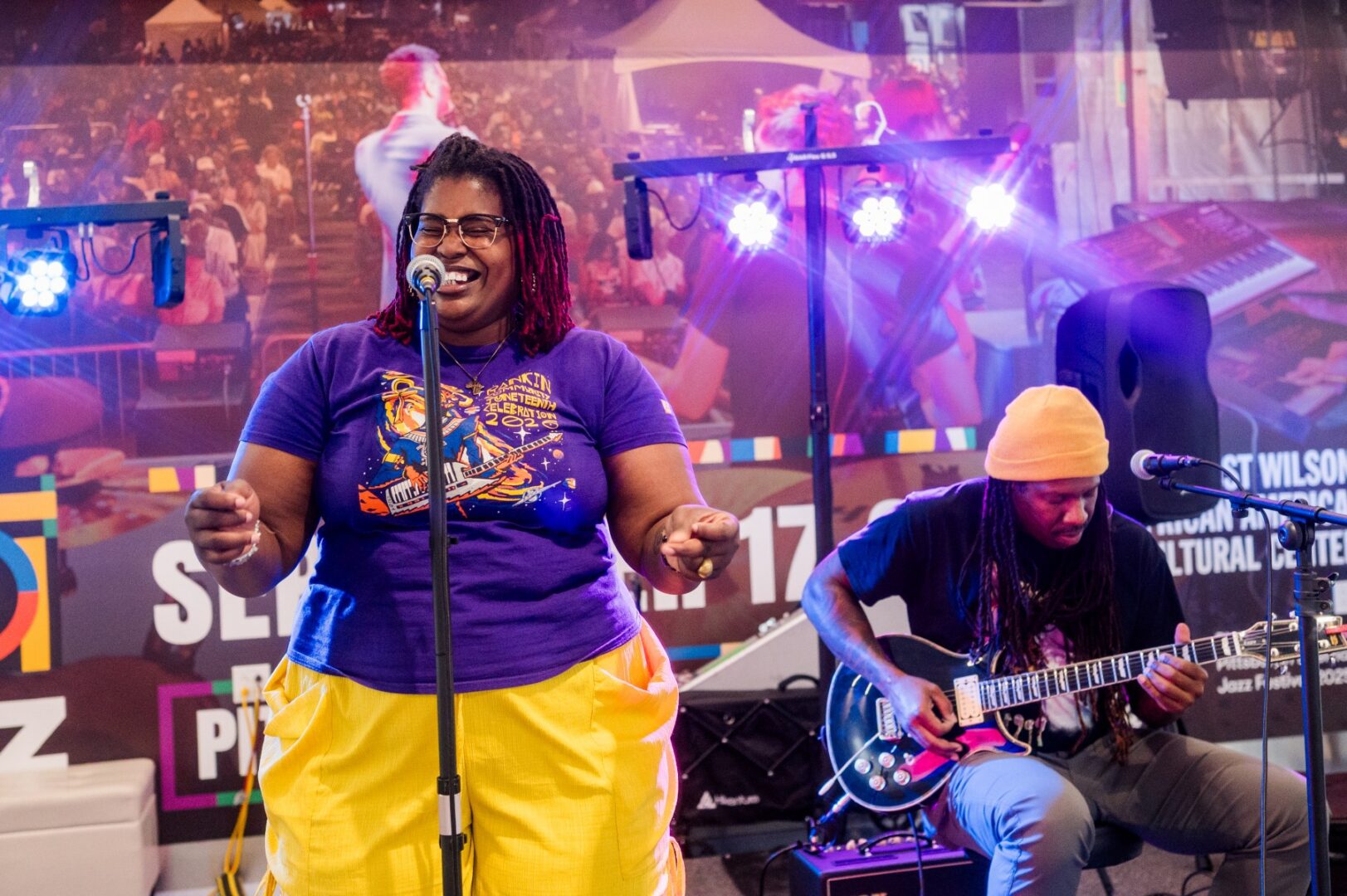
Travelers passing through Pittsburgh International Airport’s airside terminal during this month might have caught a case of the blues — but not because they missed a flight.
JAZZPORT, Pittsburgh International Airport’s week of jazz performances, returned for its third year of programming from Monday, Sept. 14, through Thursday, Sept. 17. The week of performances has become an opening verse, so to speak, for the Pittsburgh International Jazz Festival — an event organized by the August Wilson African American Cultural Center that highlights the best jazz musicians from throughout Pittsburgh and around the globe.
The Jazz Festival just celebrated its 16th installment.
“The Pittsburgh International Jazz Festival attracts music lovers from all over the country, and Pittsburgh’s rich jazz legacy flows through our city, connecting neighborhoods and carrying our culture worldwide,” said Janis Burley Wilson, President & CEO of the August Wilson African American Cultural Center, in writing about the festival. “We are proud to be the home and birthplace of jazz legends like Mary Lou Williams, Jeff ‘Tain’ Watts, George Benson, Earl ‘Fatha’ Hines, Roger Humphries, and a proving ground for so many great jazz musicians.”
Although it’s not often mentioned in the same breath as New York or New Orleans, Pittsburgh has a rich jazz history. Chad Taylor, associate professor and artistic director of jazz studies at the University of Pittsburgh, called it “unprecedented.”
During the Great Migration in the early- to mid-1900s, many Black Americans flocked from the South to northern and midwestern industrial towns. Pittsburgh itself was a popular destination because its mills represented stable, fairly well-paying work.
Taylor said many folks discovered that the life that was envisioned wasn’t necessarily the reality — especially as the industrial decline of the late 1900s began.
Still, many famous jazz musicians were among the second wave of southerners to arrive in Pittsburgh.
“Pittsburgh native and vocalist Billy Eckstine had a legendary ensemble that is famed as the first bebop big band, featuring jazz legends like Dizzy Gillespie, Charlie Parker, Miles Davis, and Art Blakey,” Taylor said.
The Steel City also had iconic venues that were pivotal in shaping the local sound.
“The Crawford Grill was a legendary jazz club that was in the Hill District where many local and national jazz legends performed,” he said. “In addition, the New Granada Theatre is currently being renovated, which is another legendary performance located in the Hill District.”
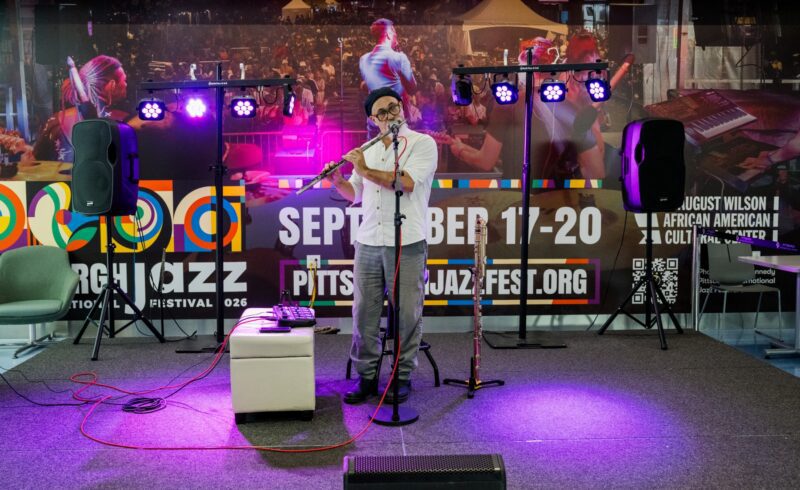
Clairton musician Lee Robinson performs on stage at PIT’s JAZZPORT. (Photo by Beth Hollerich)
Christiane Leach started as a senior project manager in the airport’s Office for Public Art in 2021. Core to her role was the expansion of PIT’s art and performance programming.
“At the time, I had been looking for ways to connect the PIT Art in the Airport program to things that were happening in the city,” Leach said. “I had a roster of jazz musicians that I could schedule at that time, so I was softly connecting it to the Pittsburgh International Jazz Festival without officially, as a way to support what they were doing.”
As things go in Pittsburgh, though, the performances soon crescendoed into an intentional partnership; Leach and Burley — the August Wilson Center’s president & CEO — had already built a relationship through their work at other local arts institutions.
The formal JAZZPORT program was soon to follow. Its third year of events featured both pianists and full bands over five days. Performances were held at both the PIT Stage — the airport’s house music venue in the heart of the post-security terminal — and the PIT Piano Stage, located on the second floor of the pre-security terminal.
Leach relishes when performances line up with citywide events like the Pittsburgh International Jazz Festival because it eases travelers into the festivities.
This year’s featured performers were multi-instrumentalist Sean Baker; jazz pianist Howie Alexander; flutes-and-saxophone maestro Erik Lawrence; blues duo Soulful Femme; Brazilian jazz performers Lilly Abreu and Zé Maria; drummer Dennis Garner and his band, Tempo Noir; and pianist and music instructor Antonio Monteiro.
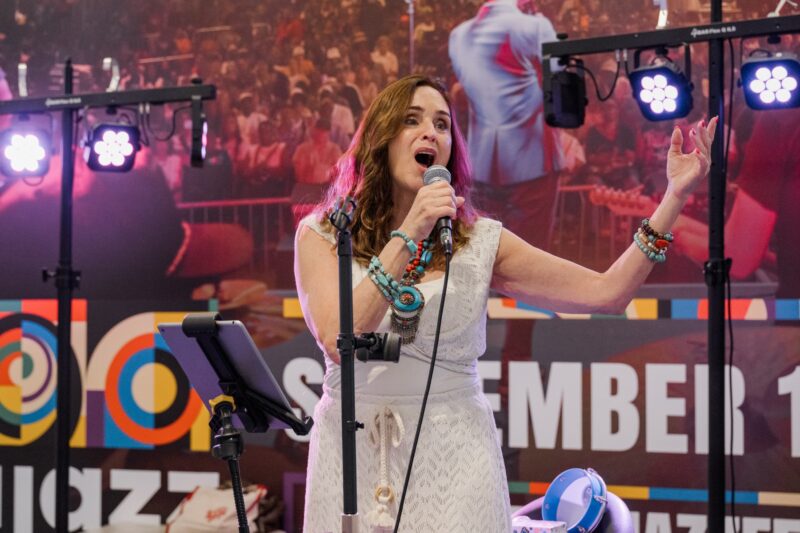
Brazilian vocalist Lilly Abreu entertains travelers during JAZZPORT. (Photo by Beth Hollerich)
All seven performers are currently based in Pittsburgh, and many are area natives.
Leach herself calls PIT’s two stages “atypical, nontraditional performance spaces” compared to other historic and modern Pittsburgh venues. Both the Main and Piano stages exist in a movement-centric space; it’s not uncommon for audiences to be more concerned with catching a flight rather than stopping to take in the music.
Still, Leach adds, the performance program has been a broad success for both passengers and musicians.
“It’s a little odd for performers at first, but once they get there, they love it,” Leach said. “They have the greatest conversations with people. Now that we have seating, people just sit and listen and clap.”
Leach added that during the rest of the year, the stages aren’t limited to musical performances. The Art in the Airport program has hosted comedians, storytellers, poets, and dancers as well.
“It’s like a little taste of any kind of venue you’d find in Pittsburgh,” she said.
The 2026 installment of JAZZPORT also marks the program’s first full return to form since the new landside terminal opened in November of last year.
Leach said she was proud to be able to not only welcome bands back into the space — construction limited last year’s performances to pianists only — but also perpetuate the culture of sharing that’s so integral to Pittsburgh’s arts scene.
Like a well-tuned big band, coordinating with other players and constructing melodies out of each other’s riffs makes for easy listening.
“The performance program at the airport, overall, lends itself to that type of sharing,” Leach said. “We love the arts and culture in Pittsburgh, so when we get opportunities to highlight what’s happening, it’s great.”