Pittsburgh Could Help Launch Next Generation of American Space Leadership
Proposed U.S. Space Academy at PIT would build on region’s role as a catalyst for innovation, technology and ongoing aerospace development
By Blue Sky Staff
Published November 23, 2026
Read Time: 4 mins
Pittsburgh has long been known as a global leader in technology and innovation and could soon build upon its growing aerospace industry.
Last week, Pennsylvania Gov. Josh Shapiro, U.S. Sen. Dave McCormick, Penn State University, the Keystone Space Collaborative, and Pittsburgh International Airport announced the state has submitted a formal proposal to host the new, permanent United States Space Academy.
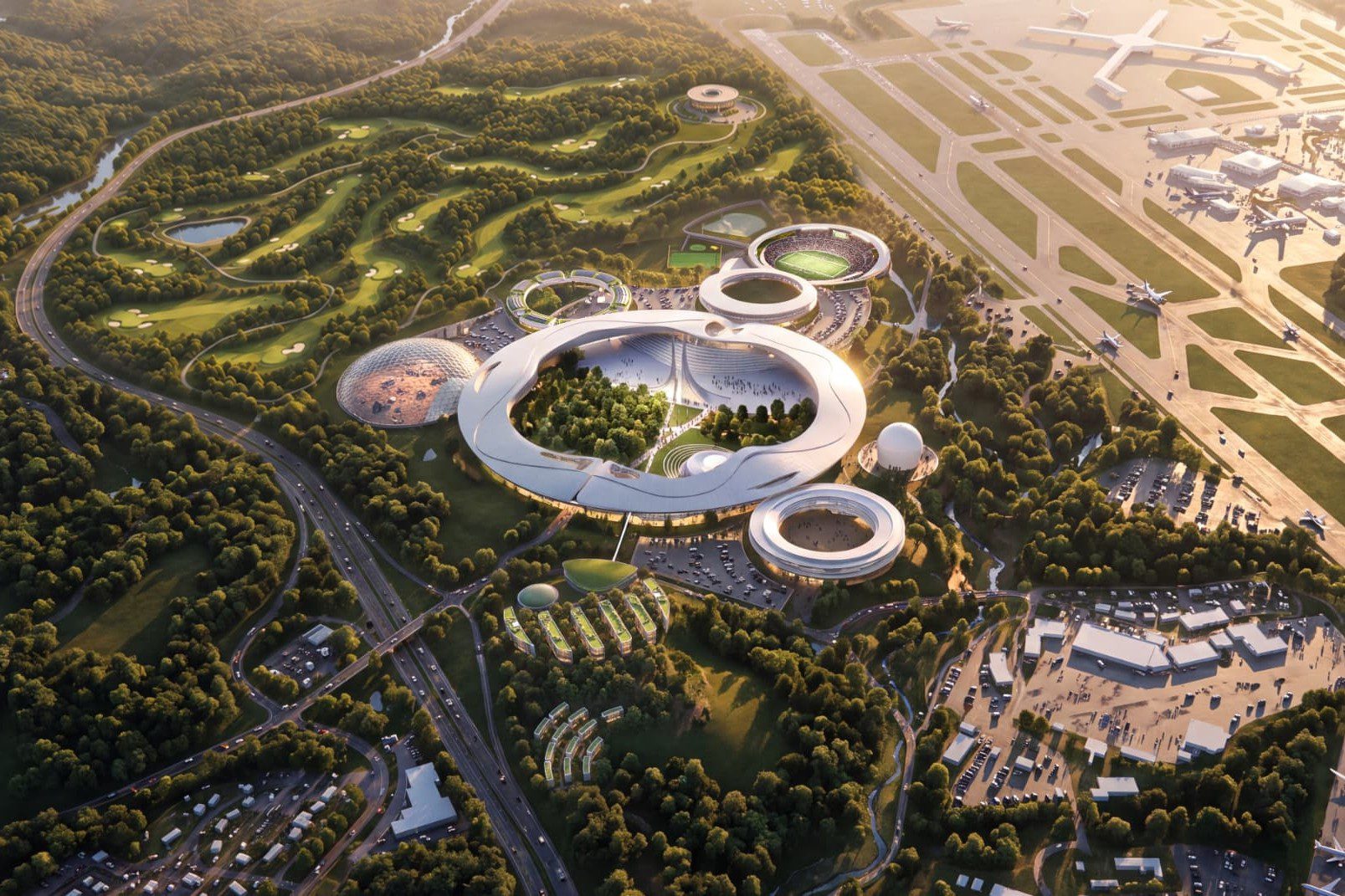
Under Pennsylvania’s proposal, the Space Academy would break ground on a new campus on 300 acres of developable, airport land — in an area known as Southfield Business Park located near PIT’s new terminal — in 2027. The permanent campus would formally open for 1,200 students by Fall 2031, with the potential to grow and support up to 4,000 students.
“Pennsylvania is now uniquely positioned to welcome the United States Space Academy – building off our robust space industry and world-class research universities – to launch the next generation of America’s scientists, engineers, astronauts, and servicemembers and ensure America remains the global leader in space,” said Shapiro. “Pennsylvania’s application provides the federal government with an opportunity to strengthen and diversify America’s space industry. My Administration is all in and we’ve assembled a bipartisan team of Pennsylvania leaders who are committed to the Space Academy’s success here in our Commonwealth.”
McCormick echoed the region’s strengths as an ideal site for the academy.
“Pennsylvania has the talent, technology, and industrial strength to help America win the race for space dominance,” McCormick said. “Bringing the U.S. Space Academy to Pittsburgh would build on those strengths, create new opportunities for Pennsylvanians, and train the next generation of leaders who will ensure America remains the world’s leader in space.”

Under Pennsylvania’s proposal, the Space Academy near PIT would formally open for 1,200 students by Fall 2031, with the potential to grow and support up to 4,000 students. (Courtesy of Penn State/Cocoziello Institute of Real Estate Innovation)
For PIT, the proposal reinforces a broader vision for airport property: creating value for the region not only through air service and passenger activity, but also by supporting industries, businesses and institutions that are shaping future economic development.
“The Pittsburgh region is a global leader in technology, artificial intelligence, advanced manufacturing, energy, aerospace and more. Powered by our world-class universities and unmatched workforce, this region is uniquely suited to be the home of the United States Space Academy,” said Pittsburgh International Airport CEO Christina Cassotis.
“Our airport is known around the world as an innovation leader. Coupled with our abundant real estate options and proximity to two military bases on-site, this proposal presents a compelling opportunity to develop a transformational campus.”
In hosting the Space Academy, Pennsylvania would benefit from billions of dollars in combined public and private sector investment, with the potential to create thousands of new jobs. Pennsylvania’s proposal includes a commitment to invest $285 million in the Academy, including $85 million in state funding to support its construction and transportation needs, and a commitment to raise an initial $200 million private endowment.
As the Southfield site is prepared for development, the proposal calls for an interim academy campus at the former Pittsburgh Technical College in North Fayette Township, a few miles from the airport site.
The first cohort of approximately 300 students could begin instruction in 2028, using existing classrooms, laboratories and student housing. Once the permanent campus is complete, the former college would become a Space Academy Innovation District, offering additional laboratories, business incubators, classrooms and residential opportunities.
The Pittsburgh region offers a strong foundation for the academy. Pennsylvania’s space economy has generated $8.6 billion in economic impact over the last four fiscal years and includes 556 businesses across the space supply chain. The Pittsburgh region is home to 126 of those businesses, representing areas such as engineering, research and testing, software and computing, advanced machinery, spacecraft, power systems and propulsion.
Penn State University would lead the academy’s proposed academic program, in collaboration with six other research universities across Pennsylvania. Students would receive instruction and hands-on experience in artificial intelligence, robotics, life sciences, advanced manufacturing and other space-related disciplines.
The proposal also builds on the region’s existing aerospace and defense assets, including the military installations located at PIT, as well as its universities, research institutions and growing commercial space industry.
“Pennsylvania has the rare combination of world-class research universities, a deep industrial and defense manufacturing base, extraordinary robotics and AI capabilities, and a legacy of building the technologies that move our nation forward,” said Founder and Board Chair Justine Kasznica, Keystone Space Collaborative.
“Through the Keystone Space Collaborative, we have spent years connecting these assets into a regional space economy. This proposal demonstrates that Pennsylvania is ready to turn that ecosystem into a national asset — and that the Academy can give NASA and the nation a powerful new constituency of talent, industry, and bipartisan support for American leadership in space.”
Allegheny County Executive Sara Innamorato said Pittsburgh International Airport’s location provides massive benefits for the academy location.
“Allegheny County has a proud history of building what’s next, and the United States Space Academy represents an incredible opportunity to carry that legacy forward,” Innamorato said. “With a perfect site next to the new Pittsburgh International Airport, world-class universities, skilled workforce, advanced manufacturing capabilities, and a growing technology sector, we have the site, talent and resources to help shape the future of the space industry.”