A Year After PIT’s New Terminal Debut, Airports Across the Country Are Pursuing Their Own Major Projects
From Columbus and Cleveland to Dulles and Austin, airports are modernizing infrastructure with expansive projects
By Roman Hladio
Published November 16, 2026
Read Time: 5 mins
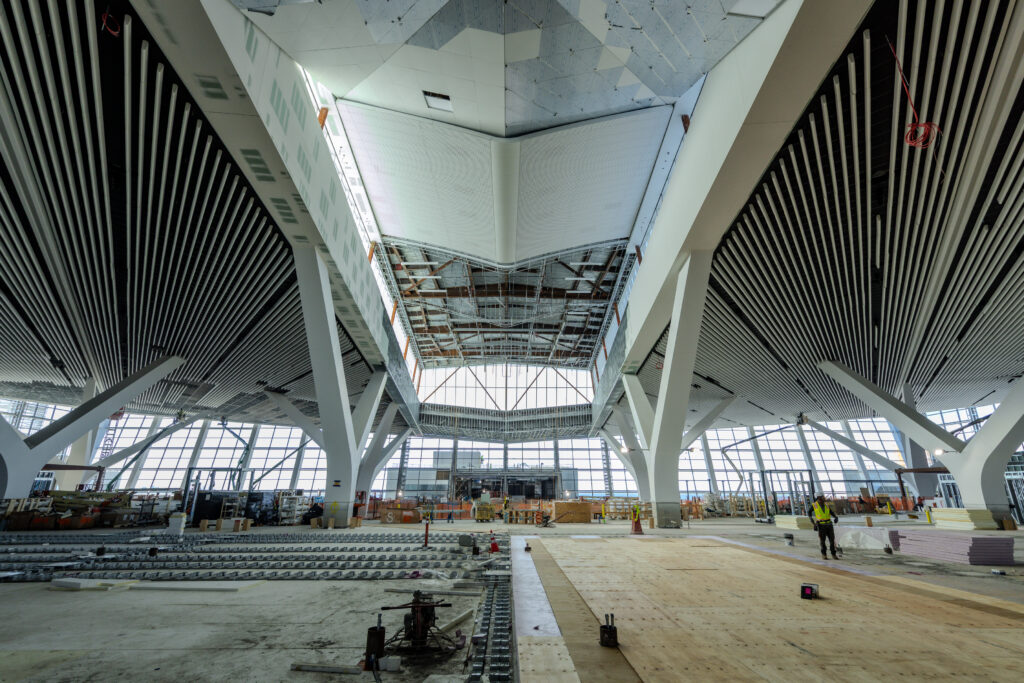
It’s been a year since passengers first stepped into Pittsburgh International Airport’s transformed landside terminal.
The new terminal program cost $1.7 billion and included the construction of the new terminal itself, along with a state-of-the-art parking complex, new roadway system, consolidated baggage matrix and a host of other behind-the-scenes improvements.
“What Pittsburgh did takes a lot more than just money and an architect,” said Michael Boyd, President and CEO of the aviation consulting organization Boyd Group International. “You’ve got legal issues, you’ve got FAA issues. It’s very tough; you can barely move a potted plant without having to go through some legal or regulatory exercise.
“That terminal redevelopment they did was a massive job, and they did it very well.”
Pittsburgh is far from the only city with evolving air travel needs, though. According to Airports Council International – North America (ACI-NA), there were nearly one billion enplanements in 2025 with forecasts rising to 1.4 billion by 2040 and 1.7 billion by 2050. ACI-NA’s 2025-2029 airport infrastructure needs report estimates that U.S. airports will require $173.9 billion in infrastructure investments by 2030.
“This marks a significant increase from previous projections and reflects rising construction costs, emerging facility requirements, and the complexity of projects, particularly in our major metropolitan areas,” Kevin Burke, the former President and CEO of Airports Council International wrote in announcing the report in 2025. “The demand for modern, resilient airport facilities has never been more pressing.”
New York-JFK’s 2.6 million-square-foot Terminal 1 is part of a $19 billion redevelopment of the airport which includes include the construction of two new terminals, the modernization and expansion of two existing terminals, a new ground transportation center and an entirely new, simplified roadway network. (Courtesy of Port Authority of New York and New Jersey)
Terminal construction projects currently underway across the nation range in price, reflecting ACI-NA’s sky-high estimates. Topping the chart is Washington Dulles International Airport’s (IAD) $22.5 billion renovation, which was announced by President Donald Trump in July.
Dulles is hardly alone. Airports across the country are investing billions in new terminals and infrastructure improvements to accommodate current market needs and modernize aging facilities.
Dallas Fort Worth International Airport (DFW) is undertaking $4 billion in terminal renovations and expansions, while Austin-Bergstrom International Airport (AUS) is adding new concourses and gates, part of a $5 billion project.
At John F. Kennedy International Airport (JFK) in New York, a nearly $19 billion redevelopment is reimagining much of the airport’s terminal infrastructure.
A number of other projects are more similar in size or scope to Pittsburgh, including:
- Houston George Bush Intercontinental Airport (IAH) reopened its Terminal B after a $2.6 billion ground-up terminal transformation at the end of October. At 765,000 square-feet, the terminal is of similar size to Pittsburgh’s — 811,000 square-feet — and features an outdoor terrace, new concessions, installations by local artists, and a sensory room for travelers, among other improvements.
- Earlier this year, San Diego International Airport (SAN) completed the total replacement of its Terminal 1. The new, 1.2 million square-foot facility cost $3.8 billion. Gensler — one of the architecture firms that co-designed PIT’s new terminal — served as lead architect for SAN’s New Terminal 1 project.
- The John Glenn Columbus International Airport (CMH) also kicked off CMH Next — its new terminal project — in December 2024. At $2 billion, it will provide a number of structural, accessibility, sustainability, and artistic improvements to the existing airport.
- Cleveland Hopkins International Airport (CLE), for example, has launched CLEvolution, a multiyear modernization program aimed at transforming its airport campus. The estimate for CLEvolution’s landside program is $1.6 billion, the first part of a multiphase project.
- Tampa International Airport (TPA), for example, broke ground on its Airside Terminal D in December 2024. At 600,000 square feet, Airside D will be TPA’s largest terminal. Coming in at $1.5 billion, the new terminal will add 16 gates to the airport.
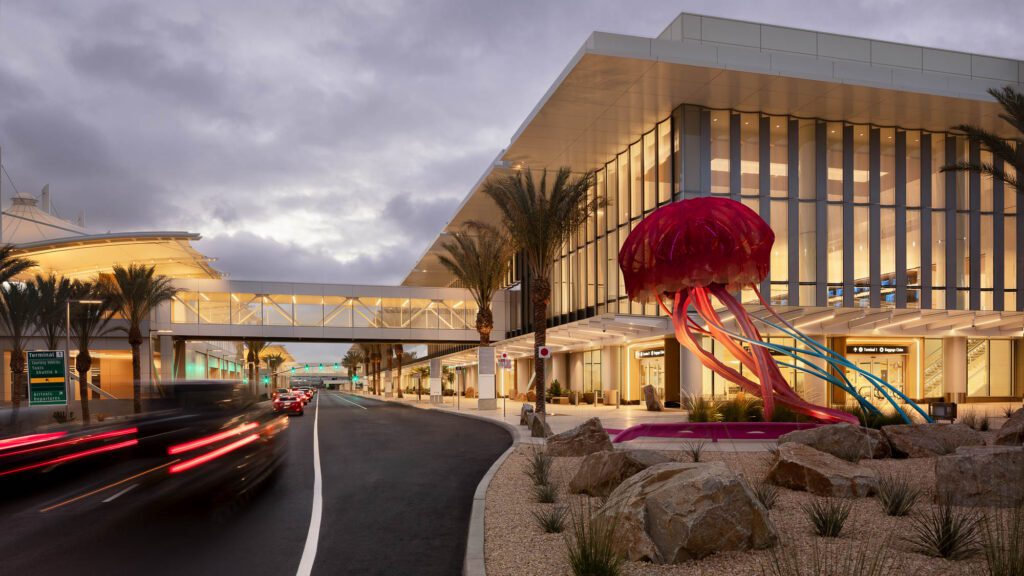
Gensler, a co-architect of the new PIT terminal, also designed SAN’s redesigned Terminal 1, which opened in September 2025. (Courtesy of Gensler)
Bijan Vasigh, a professor of aviation management at Embry–Riddle Aeronautical University and founder of Aviation Consulting Group, said he’s recently received calls from the leaders of mid-sized airports — similar in scale to Pittsburgh — who have expressed concerns that current economic headwinds create negative conditions for such infrastructure projects. They worry about the increased cost of building materials due to inflation and rising energy prices. Simultaneously, they feel the effect of fewer passengers for those same reasons.
Airports, he said, should not be managed for the short term.
“If you start back in 2001, … we had 9/11 significantly reducing the level of air travel, then we went to recovery,” Vasigh said. “Then what happened? We had the global financial crisis of 2008. Again, we had a significant drop in the number of passengers. Many airports … were not even getting revenue. And, again, the market improved.”
“You see that during Coronavirus, most airports did not have any activity, but we are not planning for the next two or three years, we are planning for the next 10 or 20 years.”
Vasigh added that aviation innovations also stand to make mid-sized airports like Pittsburgh more competitive. The wide-bodied aircraft previously used for intercontinental flights had to stick to major hub airports, because they were the only locations with large enough populations to fill the seats. Newer narrow-body aircraft, like Airbus A321neo or Boeing 737 MAX 8, resolve that shortcoming.
And that’s saying nothing of the space hubs already occupy.
“Naturally your hub airports cannot grow as much because they have already reached full capacity; look at Atlanta, look at Chicago,” he said. “Therefore, there would be some opportunity for mid-sized airports to full up the void.”
While planning for growth can be advantageous, Boyd said airports pursue expansions or renovations to meet the needs of modern travelers and ensure the long-term viability of their facilities, not out of a sense of competition.
“Updating [PIT] the way they’ve done makes a whole lot of sense,” he said. “They did it because they had an outdated or less efficient layout that they needed, so they redid it.
“Each airport is individually doing it as it needs it.”
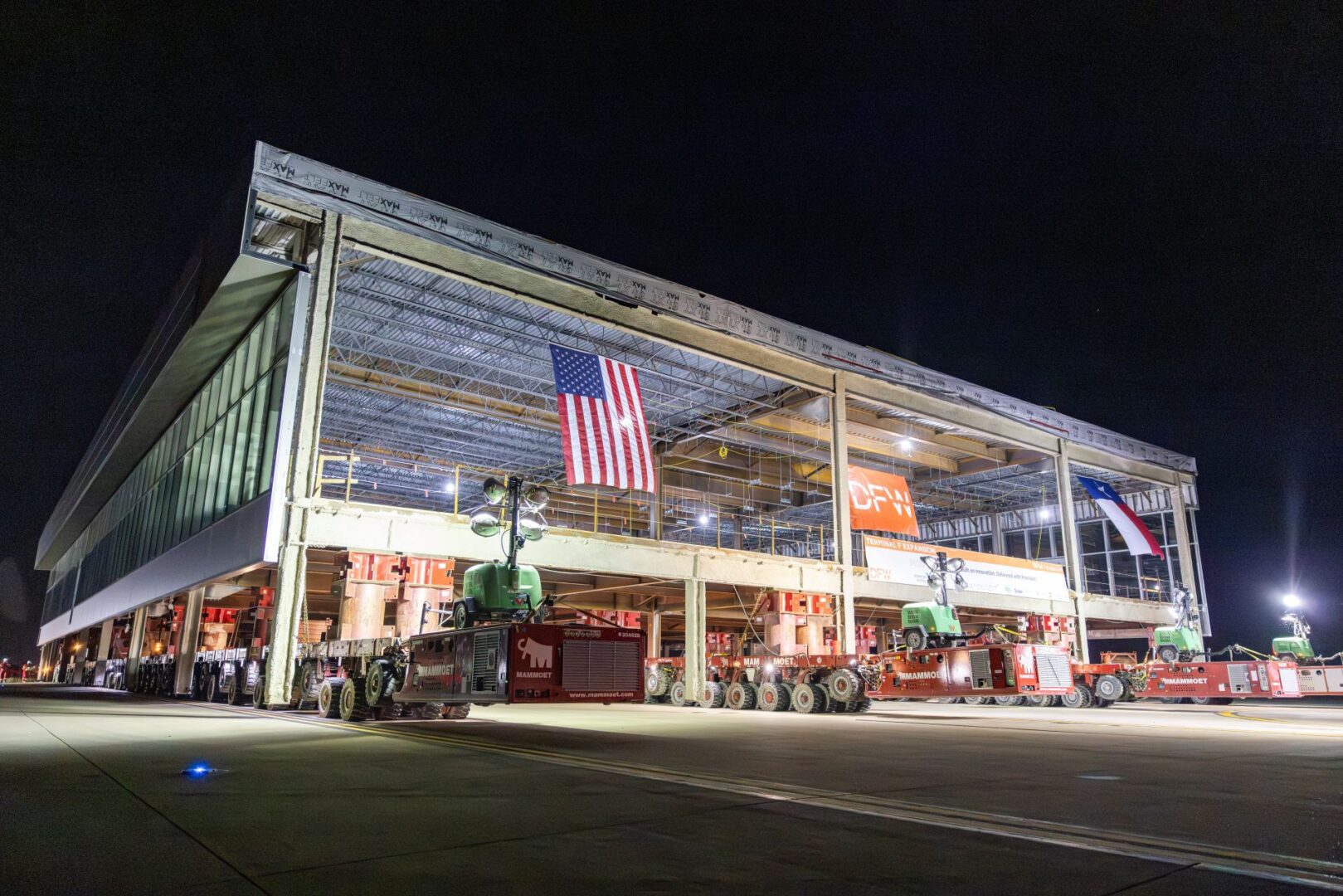
Top image: Construction crews move the third of six modules making up DFW’s future Terminal F on Aug. 4, 2025. DFW’s Terminal F is scheduled to open in 2027. (Courtesy of Dallas-Fort Worth International Airport)