Boeing’s Smallest 737 MAX Model Cleared to Fly
After years of delays, regulators approve MAX 7 variant while larger MAX 10 nears certification
By Evan Dougherty
Published August 10, 2026
Read Time: 5 mins
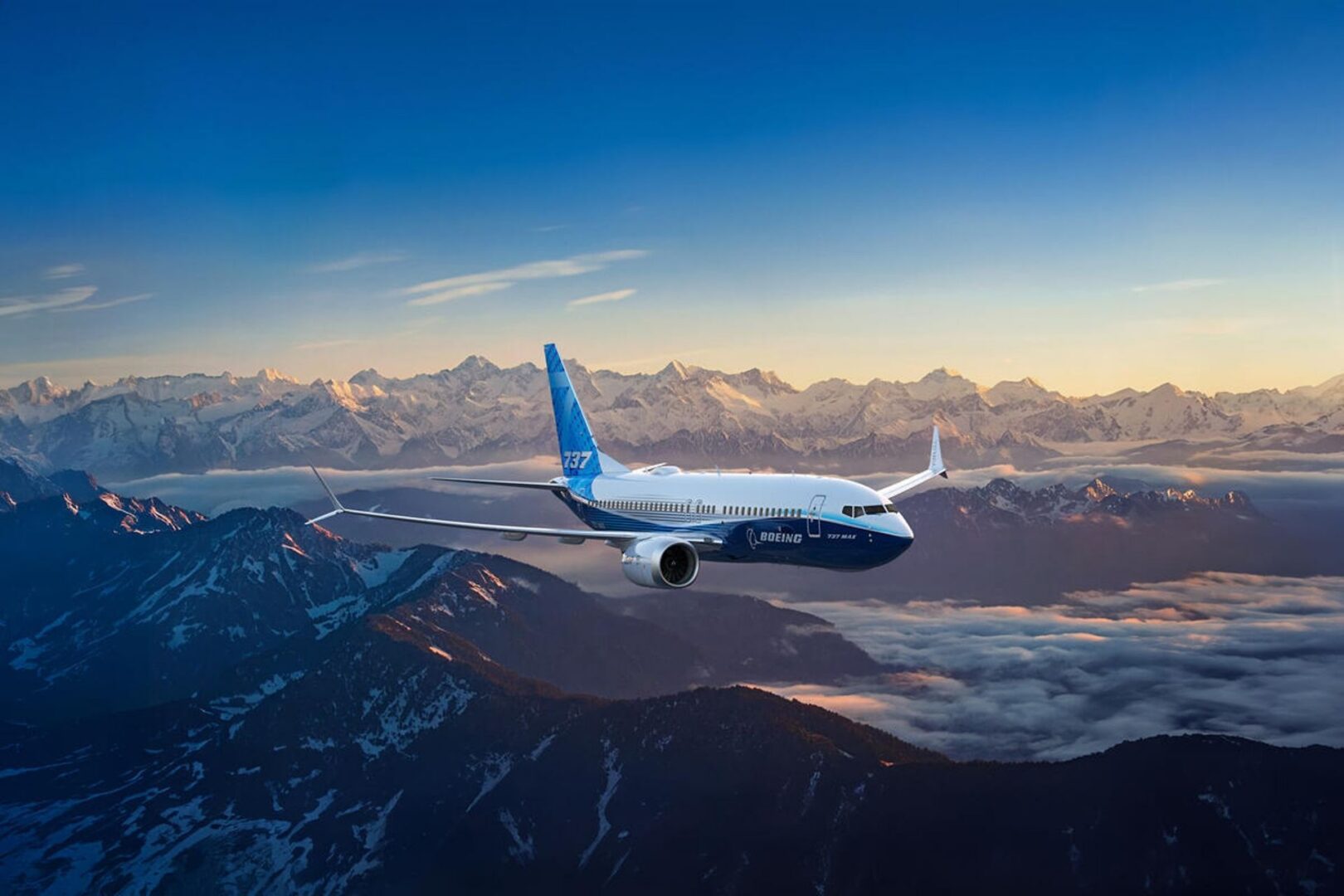
Boeing’s smallest narrowbody jet offered to airlines received its long-awaited certification from the Federal Aviation Administration earlier this month, clearing the way for the type for commercial service.
The 737 MAX 7 is the smallest variant of the popular 737 MAX family with a capacity of 135-160 passengers, placing it below the midsized MAX 8 and MAX 9 models and the high-capacity MAX 10. It is also the longest-range variant of the 737 MAX family with a range of up to 4,300 miles, making it ideal for serving longer, thinner markets with less demand, while providing nearly 20 percent fuel burn and noise reduction advantages over older 737s.
Boeing also markets the 737 MAX 7 for its excellent performance, particularly to operators that serve airfields with shorter runways or “hot and high” environments — airports located in high elevations or hot climates — where larger aircraft may need to bump off passengers or cargo.
The 737 MAX 7 primarily competes with Airbus’ A319neo and A220-300 aircraft in the 130-160-seat narrowbody aircraft segment.
Airlines expected the MAX 7 to enter service in 2019, shortly after the introduction of the MAX 8 and MAX 9 models. Two fatal crashes, however, grounded the 737 MAX for a nearly two-year period. Boeing prioritized recertifying the more numerous MAX 8 and MAX 9 variants first, delaying the MAX 7’s commercial service entry.
Additionally, Boeing redesigned the MAX 7’s engine anti-ice system, essential for preventing hazardous ice buildup while in flight, after an anomaly was found during flight testing. The redesign, along with software changes to the aircraft’s flight control and crew alert systems, required FAA certification which further delayed the MAX 7’s timeline.
In a release, Boeing stated the 737 MAX 7 test program involved over 1,000 hours of flight and ground testing which largely involved verifying the aircraft’s updated anti-ice system design, as well as extensive safety analysis and human factor reviews.
“This important certification validates the rigor of our airplane’s design and recognizes the determination and resilience of our 737 MAX development team,” said Stephanie Pope, president and CEO of Boeing Commercial Airplanes, in a statement.
Mike Sinnett, Boeing’s senior vice president of Product Strategy, Product Development and Development Programs, said the airplane manufacturer worked closely with federal regulators throughout the process, holding, “regular and detailed discussions with the FAA to ensure Boeing understood the requirements and provided transparency of our progress.”
Certification of the 737 MAX 7 is significant for Southwest Airlines, the largest carrier by total passengers and destinations at Pittsburgh International Airport.
Southwest is the model’s launch customer and by far its largest with over 300 on order. Southwest, the largest 737 operator worldwide, plans to use its MAX 7s to replace older Boeing 737-700s and complement its larger 737 MAX 8s on short and medium-haul routes, enabling the airline to continue growth.
“Southwest Airlines is pleased with the FAA’s certification of the Boeing 737-7 aircraft, and we look forward to the plane entering service in the coming months,” the airline said in a statement to The Points Guy. “Certification is an important step toward continuing to modernize our all-Boeing 737 fleet with upgraded interiors and more fuel-efficient aircraft to fit our Customers’ preferences and demand patterns.”
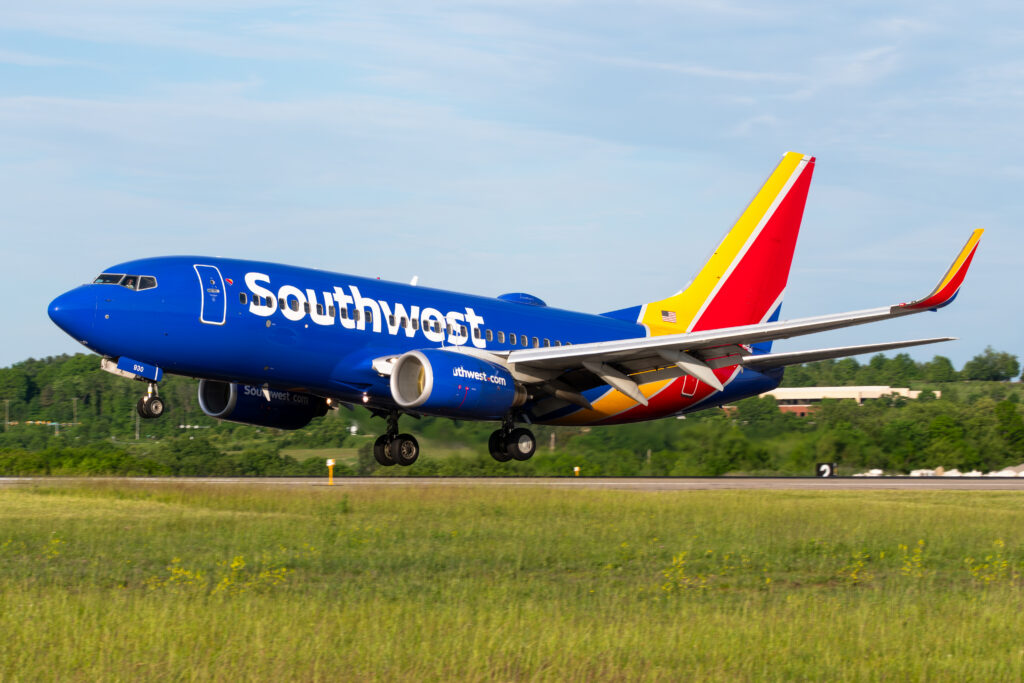
A Southwest Boeing 737-700 lands at Pittsburgh International Airport on May 25, 2026. Southwest plans to gradually phase out its older 737-700 models for the 737 MAX 7. (Photo by Evan Dougherty)
Southwest now expects to receive its first 737 MAX 7s starting in early 2027 but has not yet added the aircraft to its flight schedules; its current booking window goes out to April 5, 2027.
Boeing said it is working with Southwest for delivery of the type with personnel readying the first aircraft, including the implementation of updates to each aircraft’s final configuration.
Along with Southwest, budget carrier Allegiant Air is also a 737 MAX 7 customer with options for up to 25 aircraft. Allegiant is PIT’s third largest airline by destinations and fifth largest by passenger count. It primarily serves PIT with Airbus A320 aircraft basing up to four planes at the airport.
While the MAX 7 has been certified, Boeing is still awaiting regulatory approval for the larger 737 MAX 10 variant, which has also undergone the same redesigns as the MAX 7. Initially planned to enter service in 2020, the MAX 10 has experienced similar delays caused by the 737 MAX grounding, the COVID-19 pandemic and ongoing certification.
In July, Boeing completed its final 737 MAX 10 certification flight after nearly 1,000 total flights and nearly 3,100 flight and ground test hours, advancing to the FAA’s final certification and documentation reviews phase. The industry anticipates the 737 MAX 10 to be certified later this year and enter commercial service in 2027.
The 737 MAX 10 is the largest variant of the 737 MAX family with seating for 185-210 passengers. Boeing announced the 737 MAX 10 in 2018 in response to the popularity of the rival Airbus A321neo and growing demand from airline customers for a larger 737 variant.
Airlines are increasing investment in larger narrowbody aircraft with more overall seats, ranging from bigger main cabins for more basic economy passengers to larger premium cabins for high-spend travelers, enabling carriers to capture a broader range of customers and reduce costs per average seat mile. Additionally, U.S. airlines have cited pilot and air traffic controller shortages and lack of infrastructure at major hubs where larger aircraft can enable growth while using less real estate.
The 737 MAX 10 currently has up to 1,400 confirmed orders and commitments from airlines worldwide, including hundreds from major U.S. carriers Alaska Airlines, American Airlines, Delta Air Lines and United Airlines. Canadian carrier WestJet is expected to become the launch customer of the MAX 10 with deliveries forecasted to begin in 2027.
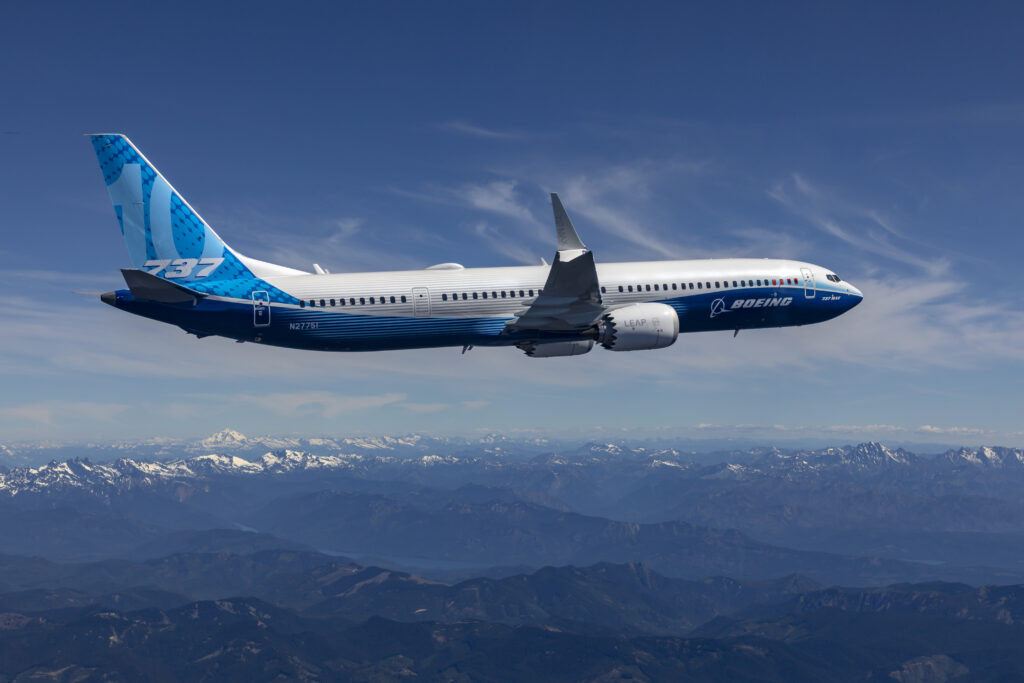
A Boeing 737 MAX 10 testbed flies over Mount Rainier, Wash., during a test flight. The MAX 10 is the highest capacity variant of the 737 MAX family seating between 185-210 passengers in a typical layout. (Courtesy of Boeing)