A Breath of Fresh Air: Pittsburgh International Airport Opens Airside Terrace
A rarity in U.S. airports, travelers post-security now have access to outdoor space at PIT
By Harriet Baskas
Published October 20, 2026
Read Time: 4 mins
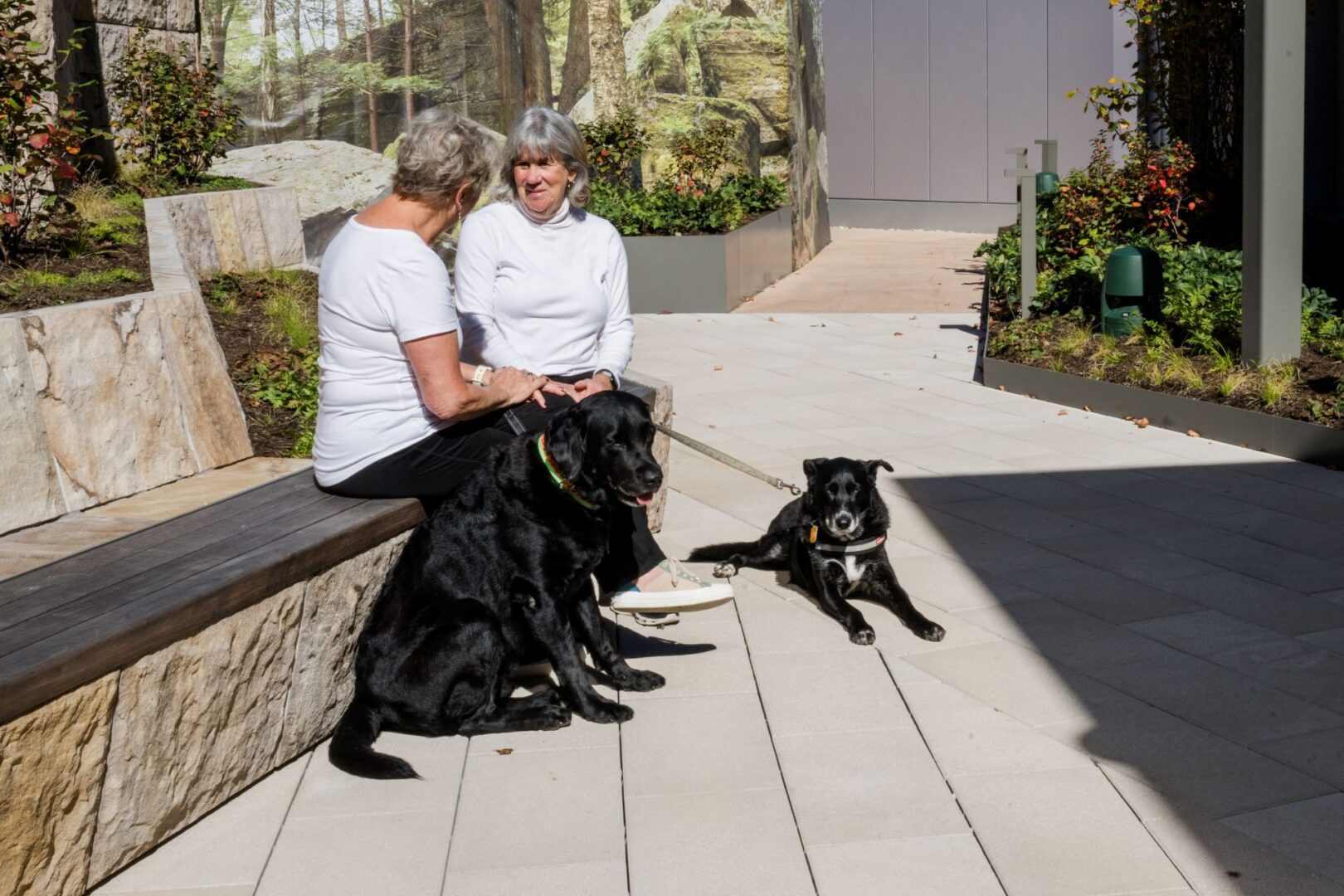
Travelers who have already passed through security at Pittsburgh International Airport now have access to outdoor space and fresh air.
PIT unveiled its latest outdoor terrace Tuesday, made possible by local philanthropy support. The outdoor space is one of four outdoor terraces (two landside; two airside) in PIT’s award winning new terminal designed by Gensler and HDR in association with luis vidal + architects.
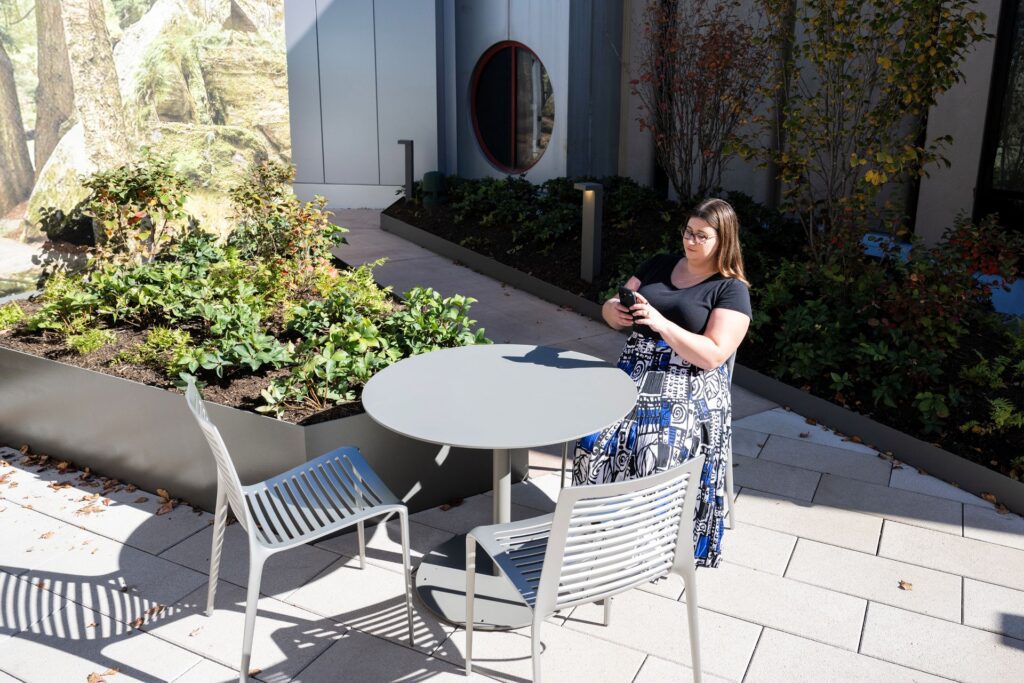
Located post-security, across from the Dick’s Sporting Goods display near the beginning of Concourse D, the new North Airside terrace features built-in bench seating, tables and chairs, native plantings and a pet relief area. The space offers travelers a quiet, outdoor place to relax before or between flights. The latest terrace is more than 1,000 square feet with the flexibility to expand.
“We are incredibly proud to open our latest outdoor terrace, one that provides access to the outdoors post-security. These terraces are the most beautiful outdoor spaces at a U.S. airport and have been carefully designed to allow for a Pittsburgh, western Pennsylvania, Allegheny County experience for travelers, as well as staff, to encounter the beauty of this area, and really, to just to feel better,” Allegheny County Airport Authority CEO Christina Cassotis said. “Thanks to our community partners, including local foundations who helped make this possible.”
The opening of the first airside terrace comes less than three months after the opening of the larger landside (pre-security) UPMC Terrace. The remaining two terraces will open in 2027. The terraces were made possible through financial support by the Richard King Mellon Foundation and the Hillman Foundation.
Landscaping for all four of PIT’s terraces draws inspiration from the various ecoregions surrounding Pittsburgh, which are quite varied. So, while the plantings and layout on the pre-security UPMC Terrace evoke the rivers and rolling hills of the Western Allegheny Plateau, the design of the airside terraces are inspired by the Central Appalachians, which have more rugged plateaus and exposed rock formations.
Gardens in both airside terraces reflect that rugged landscape. “We brought in some interesting sandstone from a local quarry and used it as cladding on the walls,” said Samantha Partington, Technical Director of OJB Studios, the landscape architects for the project.
(Photo by Beth Hollerich)
PIT’s terraces are key features, not afterthoughts of the new terminal
PIT’s terraces are unusual for several reasons:
- There are four of them. Most airports have none or at best just one or two.
- They are located both pre- and post-security.
- They are not add-ons to the terminal. Instead, there were part of the original architectural concept of creating a “pavilion in the woods” and creating an authentic sense of place.
“The landscape designers took inspiration from the fact that the new terminal was going to be part the larger ecosystem” of PIT’s existing beautifully landscaped grounds,” said Carolyn Sponza, Managing Director, Studio Director and Principal at Gensler’s Pittsburgh office.
Functionality also played a part
The UPMC Terrace was placed over the new terminal building’s large new baggage handling room. “That allowed us to use what would have been expensive underused roof space for a human-focused use instead,” said Sponza.
The airside terraces allowed the project designers to use pockets of bonus space created by building the new landside terminal next to the existing terminal.
“The existing building looked like an ‘X’ and we didn’t need to fill in all the residual space between the new building and the X,” said Sponza, “So there were two very interesting little pieces of space that have two levels to them because the levels of the two buildings are different.”
The leftover spaces could have ended up as walls separating the new building from the old building. But the team was able to use that change in floor level to create dramatic open spaces that reference the natural topography of the Western Pennsylvania region, Sponza added.

PIT’s terraces are on the leading edge of a trend
Terraces, observation decks, patios and lovely landscaped spaces were once common at airports and were closely linked to the fascination of flying, said Luis Vidal the lead designer and architect for PIT’s new terminal, but “over time, as terminals became increasingly focused on efficiency, security and processing passengers, many of the spaces gradually disappeared.”
They were no longer considered “strictly necessary,” said Vidal, “but the key question now is how do we define what is necessary? If wellbeing, orientation, connection with nature and quality of experience is also essential, then these spaces become necessary again,” he added.
Luckily, an increasing number of airports (and airport lounge operators) are deciding that outdoor spaces are indeed necessary, or at least desirable, and bringing these spaces back into the terminals.
“We are one of the few airports in the United States that has access to the outdoors like this without the cost of entering; you don’t have to pay, you don’t have to be a member of a certain club,” Cassotis said. “The terraces are redefining what it means to be an airport.”
Today travelers will find outdoor patios or terraces at airports that include San Francisco International Airport (which has both pre and post-security open spaces), at Denver International Airport (which has three post-security patios with firepits), at San Diego International Airport’s new Terminal 1, at LaGuardia International Airport’s Terminal C, at JFK’s Terminal 5, at Austin-Bergstrom International Airport and at handful of other US airports.
Airside patios or terraces not only help reduce stress, said Vidal, but also add “spending time in a garden” to the choices of what passengers can do while waiting for their flights. Landside gardens at airports, or parks, as he prefers to call them, offer even more options for everyone.
“They can support activities, events, and even celebrations,” Vidal said, “and then the airport is no longer only a place you pass through, but a place the city can actually use.”