Spirit Ceases Operations: What It Means for Pittsburgh
How PIT’s air service strategy mitigates budget carrier’s closure
By Evan Dougherty
Published May 4, 2026
Read Time: 5 mins
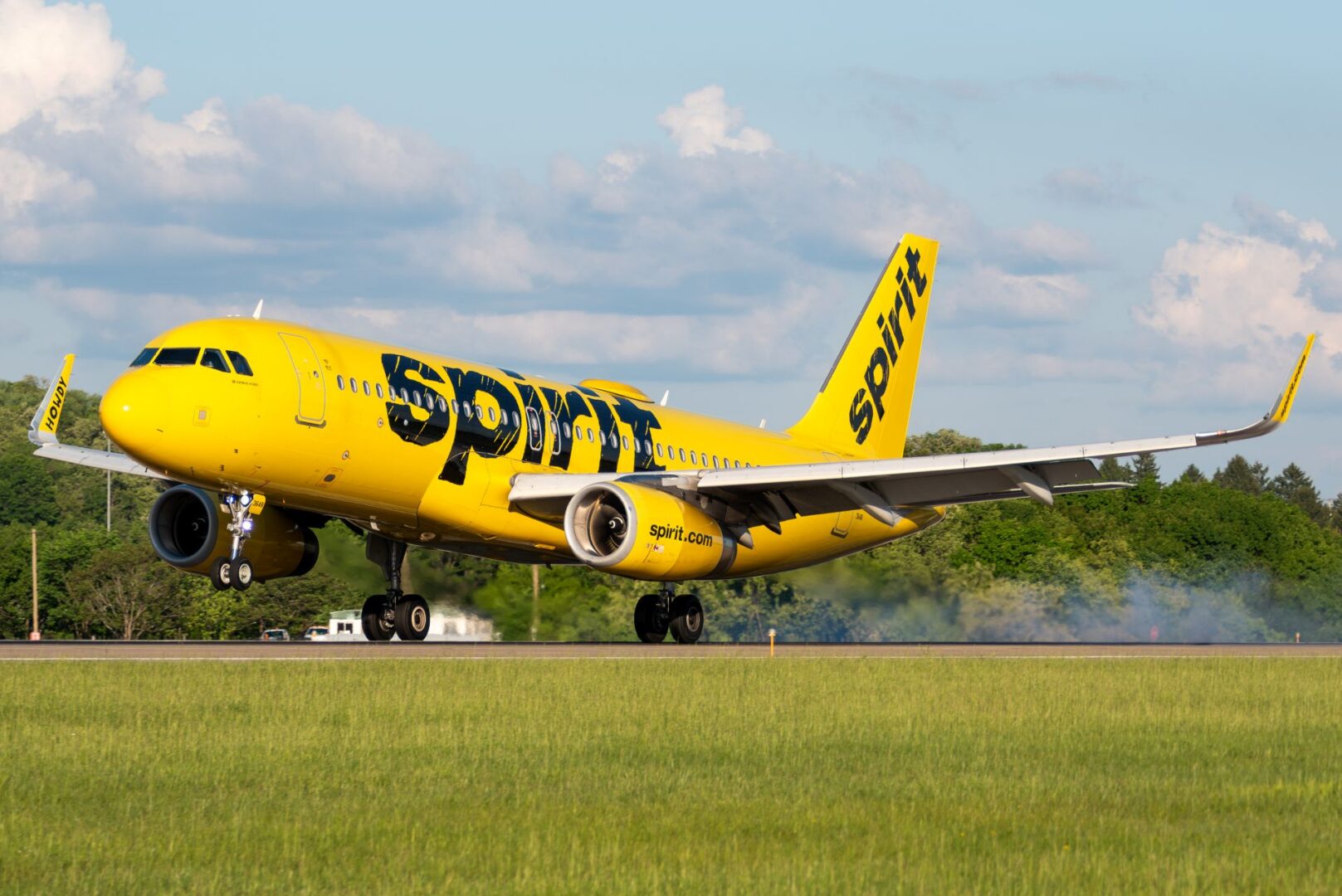
After navigating through two bankruptcies and facing mounting financial challenges, Spirit Airlines ceased all operations this weekend after nearly 34 years of flying passengers.
Despite extensive efforts by the company to restructure its business and pursue transactions to bring it back to profitability, including a nearly $500 million bailout by the Trump administration first proposed in April, surging oil prices and other pressures eventually left Spirit’s financial position untenable, leaving it with no choice but to wind down operations.
“Sustaining the business required hundreds of millions of additional liquidly that Spirit does not have and could not procure,” Spirit CEO Dave Davis said. “This is tremendously disappointing and not the outcome any of us wanted.”
The airline announced the cancellation of all its flights and the shutdown of customer support effective 3 a.m. Saturday and told passengers not to arrive at the airport for their flights. The final Spirit flight landed just after midnight Central time on May 2 at Dallas-Fort Worth International Airport from Detroit.
Spirit’s shutdown affects nearly 17,000 jobs and countless more travelers who had their upcoming trips through the carrier disrupted.
Spirit informed its customers that it will automatically process refunds for any flight purchased through Spirit with a credit or debit card to the original form of payment. Customers who booked through a travel agent are advised to contact their travel agent directly for a refund. Compensation for customers who booked flights through alternative means, including points and vouchers, will be determined at a later date through the bankruptcy process.
Additional information for customers can be found at Spirit.com.
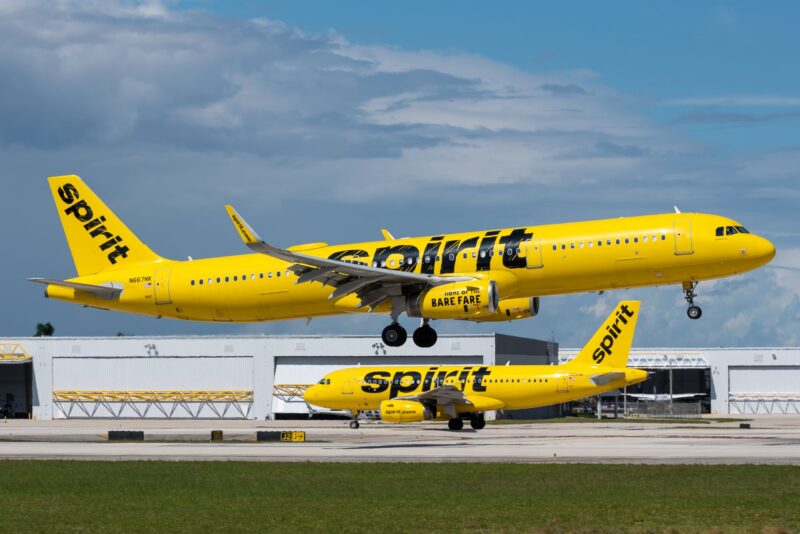
Spirit Airlines aircraft arrive and depart from Fort Lauderdale-Hollywood International Airport on Oct. 14, 2021. (Photo by Evan Dougherty)
Impact on PIT
Pittsburgh International Airport has closely monitored Spirit’s financial situation for months while the carrier publicly navigated through the bankruptcy restructuring process. Spirit’s closure was not unexpected and was a potential outcome PIT prepared for.
PIT CEO Christina Cassotis reflected on Spirit’s nine years at the airport in a separate Blue Sky News story and LinkedIn.
“Each airline that serves our market is a partner who helps our community and helps others discover our community. An airline ceasing operations is a big deal. The people who worked to build and operate the airline have lost their jobs. Travelers’ plans are disrupted,” Cassotis said.
“In Pittsburgh, we know this feeling. And no matter how ‘ready’ we were/are, it still feels crummy. Thank you to everyone at Spirit Airlines. We had a good run together. And you made a difference here.”
Spirit was PIT’s sixth largest carrier by market share, carrying 3.5 percent of the airport’s total traffic, as of March 2026, but had previously peaked at about 10 percent.
Spirit’s nonstop destinations it served from PIT – Fort Lauderdale, Myrtle Beach and Orlando – already have nonstop service on several other airlines, ensuring robust service in each market.
The following carriers also offer nonstop service, in addition to Spirit:
- Fort Lauderdale (FLL): JetBlue Airways and Southwest Airlines each operate daily, year-round service from Pittsburgh. JetBlue resumed its Pittsburgh-Fort Lauderdale service in November 2025, after a four-year hiatus, as part of its recent growth at PIT.
- Myrtle Beach (MYR): Allegiant Air, Breeze Airways and Southwest offer nonstop service. Breeze recently announced its entry into the market with nonstop, twice weekly service beginning July 3.
- Orlando (MCO): Southwest offers nonstop service to Orlando, which it recently increased from four daily flights to six, as well as Frontier Airlines. Allegiant also serves the market via Orlando-Sanford International Airport (SFB).
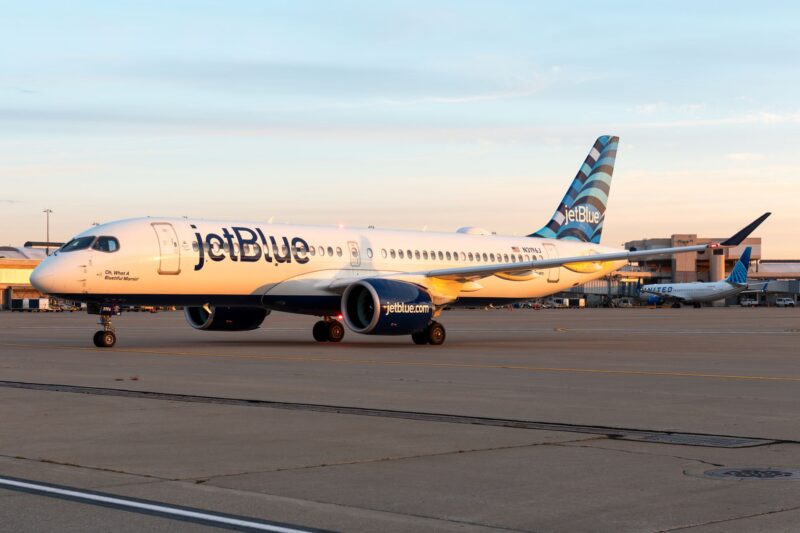
A JetBlue Airbus A220-300 at PIT on Nov. 2, 2025. JetBlue resumed its daily, year-round service on the Pittsburgh-Fort Lauderdale route in November 2025, which is also served by Southwest Airlines. (Photo by Evan Dougherty)
For the past 11 years, PIT has pursued its air service diversification strategy by ensuring that the airport is not dependent on a single carrier, providing stability for the airport and region. In that period, PIT has added seven new carriers, upping its airline total to 16 (15 not including Spirit), and increased its nonstop destinations from 36 to 64.
“Air service diversification has been a deliberate strategy by our team. It provides options and choices for passengers and protects against over-reliance on a single carrier,” said Joe Rotterdam, PIT’s Vice President of Air Service Development. “The airport continually partners with all airlines to ensure our air service portfolio is maximized for our market.”
In addition, PIT implemented plans for airport staff to assist Spirit customers, including fielding calls and answering questions in the terminal from passengers.
PIT continues to work with its airline partners to grow air service for the region, which includes Aer Lingus’ new nonstop service to Dublin launching May 25. The airport is also monitoring how other airlines respond to Spirit’s situation.
Other Airlines Step Up
Multiple U.S. carriers have announced immediate plans to help Spirit’s passengers and staff through temporary price discounts and expanded flying.
American Airlines has enacted fare caps on all routes where it competed against Spirit while Frontier is offering discounted rescue fares for Spirit customers. Delta Air Lines, Southwest, United and others have also announced special discounted fares only accessible to Spirit customers.
Hours after Spirit’s closure, JetBlue announced a major network expansion, including 11 new routes and increased frequencies on others from Fort Lauderdale, most of which were previously flown by Spirit, along with special $99 discount fares.
“With major operations in Fort Lauderdale and San Juan, we’re in a unique position to help Spirit customers get where they need to go and ensure flights remain affordable despite greater demand,” said JetBlue CEO Joanna Geraghty.
Breeze also announced it will begin new nonstop service to several markets from Atlantic City; an airport whose traffic heavily relied on Spirit.
Spirit’s Financial Woes
Since the COVID-19 pandemic, Spirit has faced a litany of challenges to its business that have led the carrier to declare Chapter 11 bankruptcy twice, first in November 2024 and again in August 2025.
Spirit has faced changing consumer preferences, rising labor costs and increased competition that have pressured its ultra-low-cost carrier model. Numerous budget carriers, including Spirit, have rolled out major pricing and onboard experience changes in recent years attempting to attract more affluent, higher-paying customers.
Spirit’s merger attempts with other carriers fell apart in recent years. In 2024, Spirit aborted its merger with JetBlue after the U.S. Department of Justice successfully challenged the deal in federal court over antitrust concerns. JetBlue proposed an all-cash $3.8 billion deal to Spirit in 2022 that would have created the U.S.’ fifth largest airline, outbidding a $2.4 billion cash-and-stock merger proposal by Frontier to acquire Spirit.
According to media reports, Spirit re-engaged with Frontier in merger discussions in late 2024 and again in late 2025 but the talks resulted in no deal.
Additionally, Spirit experienced unplanned groundings of its fleet stemming from recalls issued by Pratt & Whitney for engines powering a significant percentage of its Airbus A320neo family aircraft.
Most recently, fuel costs are affecting all airlines due to the ongoing conflict in the Middle East. Fuel is one of the biggest expenses for airlines and rising oil prices have constricted already thin profit margins for many carriers worldwide.
During its most recent bankruptcy, Spirit took more aggressive measures which included shedding over half of its entire fleet, cutting numerous routes, reducing staff and selling assets, such as gates at Chicago-O’Hare and its maintenance hangar in Detroit.
Prior to its liquidation, Spirit hoped to exit restructuring by late spring or early summer.