PIT’s xBridge Program Helps Advance AI-powered Solution for Airfield Safety
Illuminex AI’s inspection solution assists in detecting and logging foreign object debris
By Daniel Lagiovane
Published August 10, 2026
Read Time: 4 mins
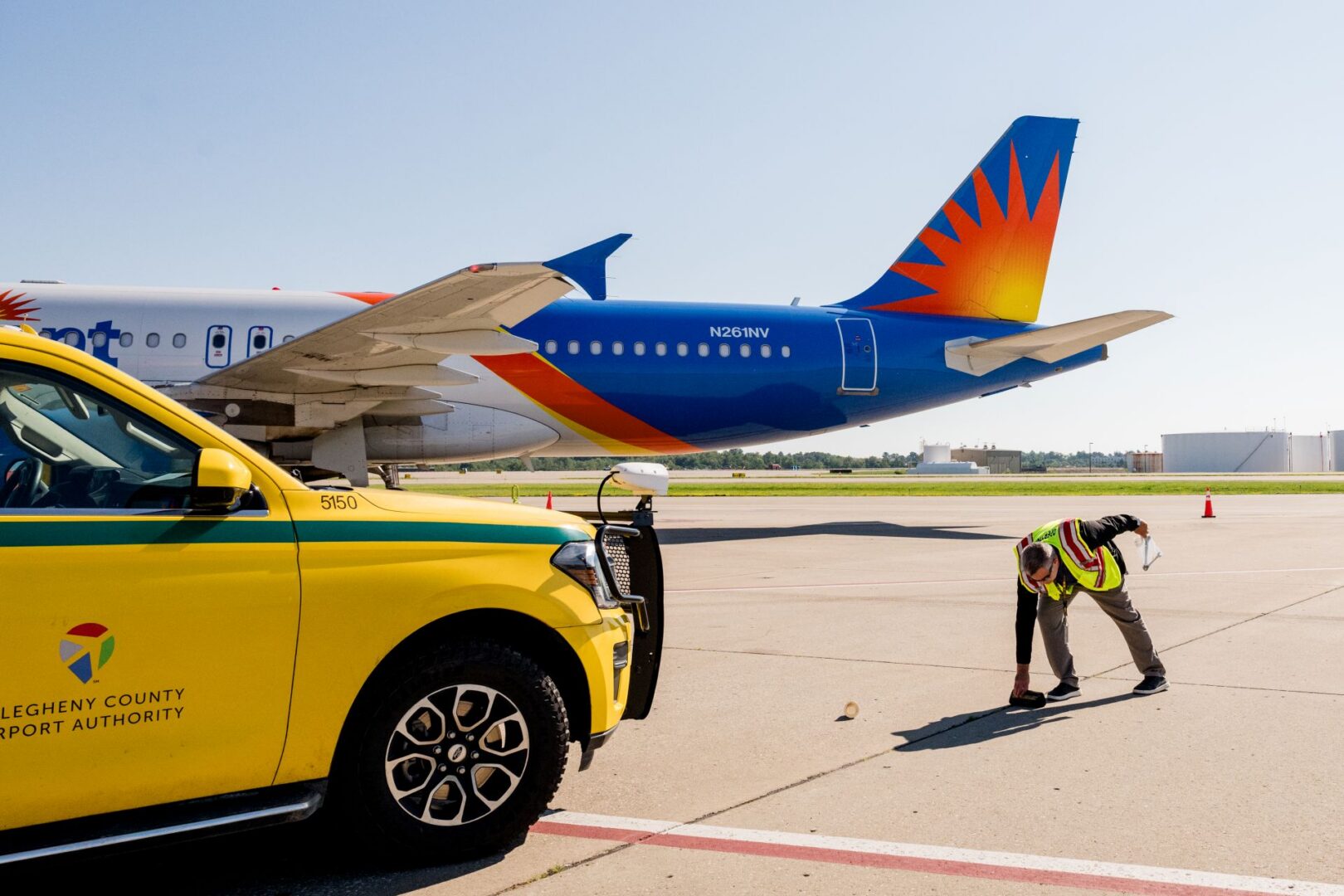
An emerging Canadian AI company participating in Pittsburgh International Airport’s xBridge program is using the airport as a real-world testing environment for its foreign object debris (FOD) detection technology.
“Foreign object debris can pose serious risks to aircraft, so we’re always looking for ways to strengthen our airfield safety program,” said Bill Calhoon, airport duty manager at the Allegheny County Airport Authority. “Testing this technology helps our Operations Team assess whether it can complement our existing inspection procedures by identifying debris faster and allowing us to respond before it becomes a hazard.”
Foreign objects — such as litter, rocks and broken branches on runways — are the leading risk for airside safety. According to the Federal Aviation Administration, FOD costs the global aviation industry an estimated $4 billion annually in direct damage and operational disruptions.
To assist inspectors in detecting and logging FOD automatically, Illuminex AI developed FODᴬᴵ, an AI-powered inspection solution. The innovative system integrates directly into existing inspection processes and records findings in its InspectEx Cloud, enabling teams to review and utilize the data to increase airfield safety and efficiency. This assists airport inspectors in focusing on response and remediation.
“Pittsburgh International Airport’s xBridge program has been an outstanding partner in advancing FODᴬᴵ,” said Brian Freed, CEO of Illuminex AI. “By giving us a true operational environment to test and refine the system alongside their experienced Operations Team, PIT is helping ensure our solution meaningfully assists inspectors, and seamlessly integrates into existing operational processes. This kind of real-world collaboration is essential to building practical, human-centered technology that strengthens airfield safety and efficiency without disrupting existing processes. We’re grateful for the partnership and the shared commitment to safer airfields.”
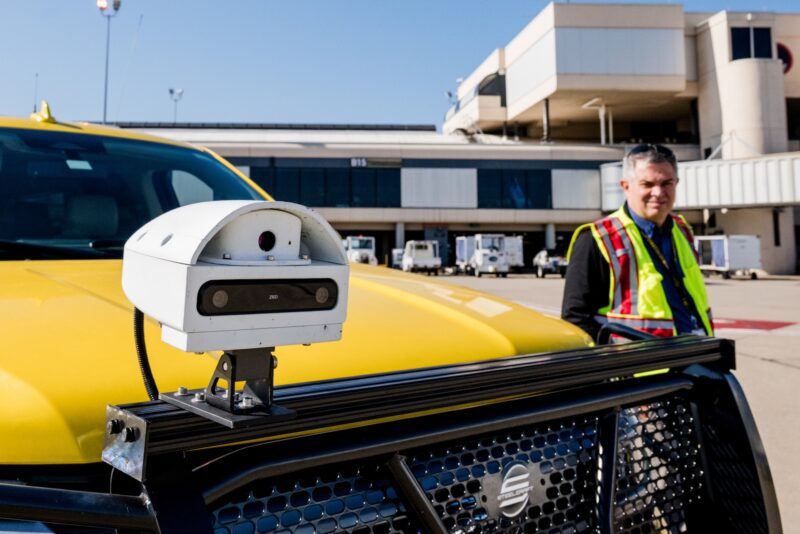
FODᴬᴵ comprises a camera and sensor mounted on a bumper, a blue box housing the embedded Nvidia system and router, which can be placed in the inspection vehicle, and a tablet that can be mounted in the center console. The camera and sensor use advanced computer vision and machine learning to automatically detect any foreign object debris on the airfield. (Photo by Beth Hollerich)
The partnership with PIT, which began in April, allows Illuminex to validate its system under actual airport operating conditions while giving PIT’s Operations Team the opportunity to evaluate whether the technology can enhance airfield safety while potentially improving the speed and efficiency of routine runway inspections, furthering xBridge’s mission of bringing innovative solutions to the aviation industry.
xBridge drives innovation at ACAA by developing and testing new technologies, processes and systems to positively impact revenues, operations, security, customer experience and sustainability. ACAA both develops new technologies in-house and partners with early-stage companies to support PIT’s needs.
“Safety is always our top priority, and we’re also looking for technologies that can make our operations even more efficient,” Calhoon said. “By testing this FOD detection system, we’re evaluating whether it can help our Operations Team identify potential hazards more quickly, reduce the time spent on routine airfield inspections and allow staff to focus on other critical operational responsibilities, all while maintaining the highest standards of safety.”
During the 6-month testing period here, the system is installed in an inspection vehicle, and the inspector will use the system at least twice a week during their regular airfield inspection process. All that is required of the user is to turn on the system and press the start and stop buttons before and after routine inspections.
Mounted to any airfield vehicle, FODᴬᴵ comprises a camera and sensor mounted on a bumper, a blue box housing the embedded Nvidia system and router, which can be placed in the inspection vehicle, and a tablet that can be mounted in the center console.
The AI-powered platform uses advanced computer vision and machine learning to automatically detect, geo-locate and log FOD in real-time. The system automatically alerts critical FOD detections in real time, which the airfield inspector can review on the tablet.
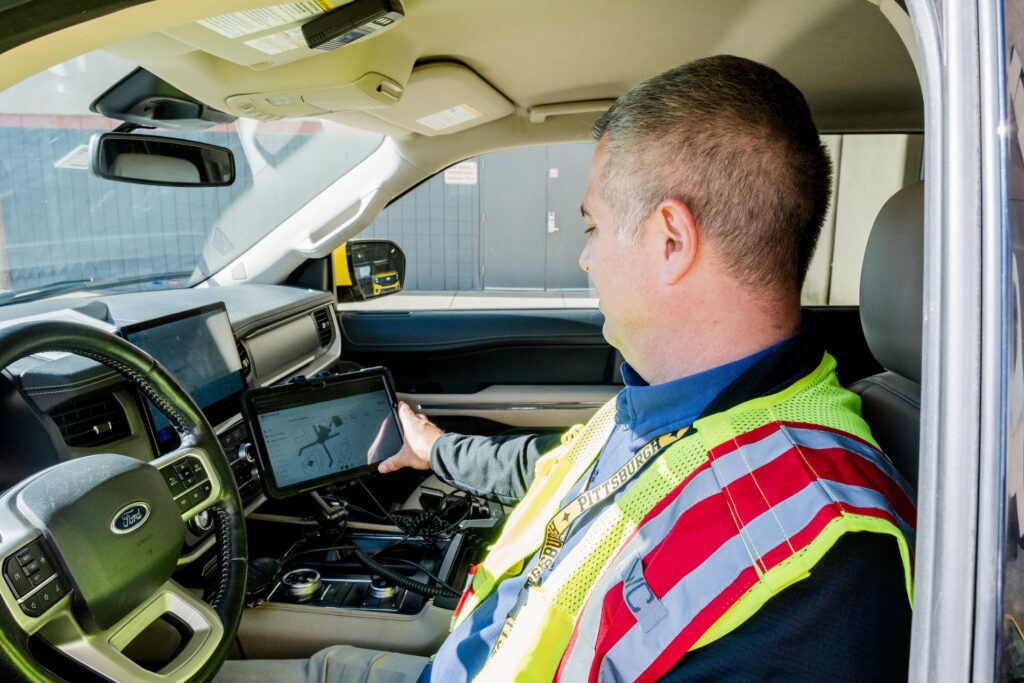
Bill Calhoon, ACAA airport duty manager, reviews a FODᴬᴵ airfield map displayed on a tablet mounted on the center console of an airport operations vehicle. FODᴬᴵ automatically detects, geo-locates and logs FOD in real-time which an airfield inspector can review on the tablet. (Photo by Beth Hollerich)
All detections are logged in the cloud, enabling teams to review and use the data to improve airfield safety and efficiency, identify sources of recurring FOD, and to support data-driven maintenance.
This solution augments the manual inspection process, automates data collection and empowers airports to enhance safety, improve operational efficiency, support proactive maintenance and repair of airfield surfaces that might generate FOD, and reduce costs associated with aircraft damage and delays caused by foreign objects.
The InspectEx platform collects digital operational data during routine activities, for a growing suite of AI-powered solutions for enhanced inspection, pavement maintenance, winter operations, perimeter security and operational safety simulation.
PIT routinely provides feedback to Illuminex AI to support future development efforts. Illuminex AI’s FODᴬᴵ testing at PIT is expected to be completed in late September or early October.
In addition to PIT, the solution is deployed at Toronto Pearson International Airport (YYZ), Columbus Municipal Airport (CLU), Savannah/Hilton Head International Airport (SAV), Morristown Municipal Airport (MMU) and two top-ten global hubs. These airports are included as additional testing sites for their platform to achieve operational readiness. Testing their technology at multiple airports is key to improving their system to function across diverse environmental conditions while providing valuable, actionable data for users.