Investment in Technology Makes PIT a Truly ‘Smart’ Airport
Data drives improvements from the passenger experience to behind-the-scenes enhancements
By Kristin Majcher
Published January 26, 2026
Read Time: 5 mins

When you take your next flight out of Pittsburgh International Airport (PIT), the first thing you’ll notice is the bright, expansive feel of the new terminal.
However, the transformation is not just an aesthetic one. PIT has worked behind the scenes to create a smart airport designed to help travelers have smoother travel experiences.
But what makes an airport truly “smart?” In PIT’s view, a smart airport isn’t a buzzword or a collection of futuristic-sounding technologies. It’s a concept that thoughtfully uses technology to improve every stage of the airport journey for passengers, all while analyzing data to constantly improve airport systems behind the scenes.
The result is a familiar airport experience for passengers, enhanced by technologies that help improve tasks like parking, navigating the airport and getting checked bags. Meanwhile, PIT’s operational teams are constantly analyzing data behind the scenes to keep systems up and running and to understand how to best tailor new services to travelers.
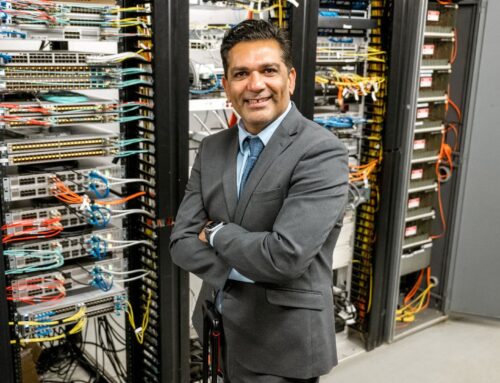
“With the new terminal, we are deploying 18 new operational technologies, and we are making sure we are collecting all the operating data from them and gathering them into a data platform,” said Deepak Nayyar, PIT’s Chief Information Officer and Executive Vice President.
Easier Parking
For many passengers, their introduction to PIT is the parking options. While parking may seem decidedly low-tech, PIT’s new Terminal Garage highlights what makes the airport “smart.”
One of the first changes that passengers will notice are visual cues that intuitively signal to drivers which of the 3,200 spaces are available, thanks to a state-of-the-art system of advanced sensors and cameras developed by TKH Security.
The new system not only shows travelers how many spaces are available on each level in real time but uses green lights above each individual space to indicate that it is open. PIT is gathering data about how well the new parking system is operating, but TKH Security estimates that the setup can help reduce parking times by up to 63 percent compared to the past.
PIT is also analyzing data from its parking systems to help it refine parking options, such as pre-booking spaces through the ParkAtPIT.com website and the new PIT Executive Lot designed for frequent travelers.
Improved Baggage Handling
Baggage handling is another aspect of the airport experience that PIT is improving through technology. The new terminal has allowed the airport to upgrade its baggage handling system to deliver bags more efficiently.
One of the most important updates to the new baggage system is that it cuts down on the distance that luggage needs to travel from eight miles to only three, helping bags arrive more quickly. The new system also has several improvements to save power, improve reliability and even prevent any potential equipment problems.
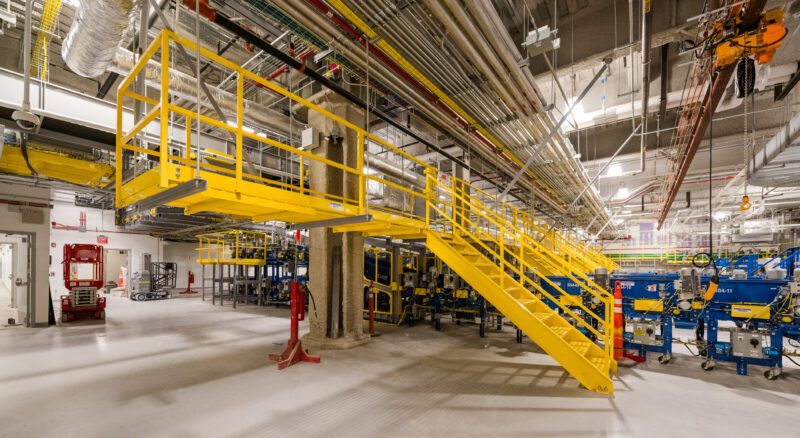
PIT’s new baggage system features numerous improvements for better power savings and reliability, and cuts down on the distance that luggage needs to travel from eight miles to only three, helping bags arrive more quickly. (Photo by Beth Hollerich)
For example, if a baggage belt or equipment is overheating, sensors send a notification to a maintenance technician to troubleshoot the issue before there’s a problem that could disrupt operations. Feeding data about baggage handling systems to the airport’s main data platform offers a more predictive and preventative approach to maintenance and operations, Nayyar said.
Nayyar also noted that PIT is also using robotic, mobile inspection tables to help streamline the baggage screening process and reduce physical strain for employees.
Better Notifications and Wayfinding
An airport can’t be truly smart if passengers don’t know how to reach the check-in desk, pass through security or find their gate. Just like in the parking garage, the airport terminal itself is now designed to help travelers move more intuitively throughout the space.
Technology plays a big role in these improvements. Passengers can now check their gate and flight status with new flight information display screens, which now show flights by departure time instead of by destination to help travelers get to their destination more quickly.
PIT has also included another tool to help passengers find their way around the airport — QR codes that provide directions to specific waypoints throughout the terminal. The codes point travelers to detailed maps of the new terminal and garage, as well as the airside terminal.
Travelers can access all of this information on their web browser without downloading any apps, which helps ensure that visitors to PIT get the information they need, when they need it.
“It looks and feels similar to Google Maps, and in the future it will also include live parking, flight status and security wait times,” Nayyar said.
PIT is also keeping an eye on the latest artificial intelligence (AI) capabilities to help passengers stay informed. The airport is already using AI to help identify wait times for security lines and staff chatbots and is exploring future opportunities with agentic AI.
Network and Connectivity Improvements
A connected airport is only as smart as its network architecture, and PIT has taken big steps in upgrading its server infrastructure and backups to make its system more resilient and to adapt to new technologies.
While travelers are busy dropping off their bags, getting to their gate and grabbing a bite to eat, PIT’s IT systems are working hard in the background to make sure that passengers, employees, airlines and the airport systems themselves have all the information they need at any given moment.
The IT team has thoughtfully developed its network infrastructure to help keep systems up and running even in the case of a power outage or cyberattack.
One of the ways it keeps systems running is by “mirroring” two data centers at PIT and Allegheny County Airport (ACG). This means that key data is available on both platforms in the case that one becomes inoperative. So if one of these data centers suffers a power outage or other service interruption, the airport can seamlessly shift to using the other one to remain operational.
Additionally, PIT has divided its network into segments to improve security and make operations more resilient. Having a segmented network helps ensure that even if one system goes down, others can continue operating. For example, if PIT’s baggage system becomes compromised, segmenting the network helps keep the problem from spreading to other critical parts of the network.
These network improvements don’t just help the airport’s backend systems, but the connectivity for passengers and stores at the airport as well. For example, the airport has launched a streamlined process for concessionaires to order and install fiber optic internet. This ensures that all vendors at the airport are using similar equipment to enable fast, reliable connections that can adapt to evolving security requirements.
PIT is also taking precautions to protect its wifi hotspots and network against cyberthreats. The airport has partnered with a security operations center (SOC) that processes more than 8 trillion security events each week, combining human experts with AI tools to focus on the most pressing threats.
All of these initiatives help ensure that the airport is ready to support new technologies as they come online, including Internet-of-Things (IOT) sensors, real-time analytics and cloud-based apps.
As technology evolves, so will PIT.
“This layered approach to infrastructure and cybersecurity allows us to detect anomalies faster, respond more effectively, and maintain operational continuity even under pressure,” Nayyar said. “It’s not just about protecting what we have — it’s about designing for resilience, so that every part of our airport ecosystem is prepared for the unexpected and ready to scale for the future.”