ACAA’s Snow Removal Investment Pays Off
Equipment upgrades aide snow fighters in keeping airports open regardless of accumulation
By Daniel Lagiovane
Published February 23, 2026
Read Time: 3 mins
How do you make the best better?
The snow fighters at Pittsburgh International Airport and Allegheny County Airport are the best in the business – and both winning the highly competitive Balchen/Post Award last year, which recognizes excellence in snow and ice control, proves it.
The recent major storm that hit the area in January reinforced how good they are. Despite a nearly record-breaking snowfall that weekend, crews at PIT and AGC kept their runways clear and facilities and roads open.
The airport maintained three operational runways throughout the storm, even as snow forced many airports across the country to close. Teams also provided smooth operations inside the terminal as well.
AGC, which is home to numerous medical transports, also maintained an open runway during the storm.
Although the crews were clearing snow for over 48 hours, grabbing naps and something to eat when they could, they weren’t alone, aided by a recent investment made by the ACAA board, ACAA leadership, and airline partners.
Over the past 10 years, ACAA has invested significantly in upgrading its snow removal equipment. This investment significantly reduced the average age of the snow removal fleet by almost half, from 27 to 14 years. This positively impacted snow and ice control operations, supporting the teams in doing their best work.
Beyond the machinery itself, the investment reflects ACAA’s broader commitment to operational resilience. Faster clearing times reduce the likelihood of delays, while improved equipment reliability ensures crews can respond immediately when winter weather strikes. With Pittsburgh’s unpredictable winter patterns, that readiness is critical.
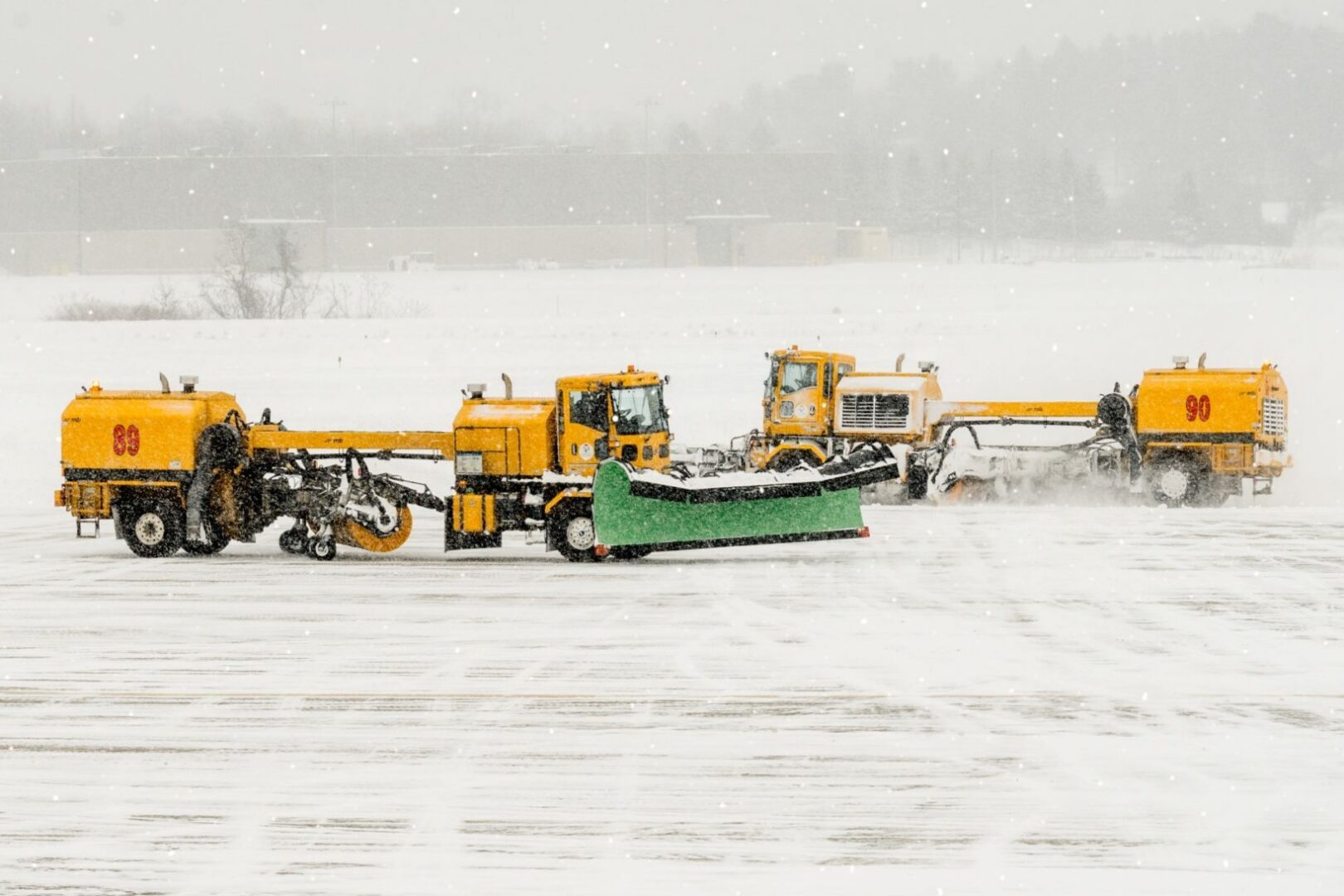
ACAA modernized its snow removal fleet with advanced plow trucks, high-capacity snow blowers, and multi-function equipment capable of plowing, sweeping, and blowing snow in a single pass. These upgrades allow crews to clear runways, taxiways, and aprons faster and more efficiently, even during heavy snowfall, keeping both airports open and available under any conditions.
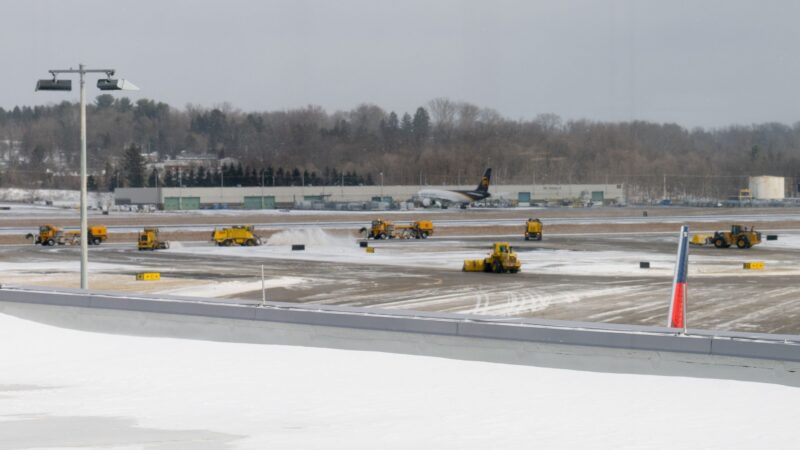
ACAA snow crews clear snow from PIT’s taxiways after a snowstorm on Jan. 20, 2026. (Photo by Beth Hollerich)
Faster, Smarter, Safer Clearing
According to ACAA leadership, the new equipment has significantly reduced runway-clearing times during snow events.
“Our teams can get out on the field quicker and work more effectively,” said Jim Moorhead, ACAA’s Vice President, Airport Operations. “That’s good for safety, good for our airlines, and good for passengers — but it also means a safer, less stressful work environment for our people. We’re able to clear faster and with less fatigue, which is a big deal when you’re out here for 24, 36, or 48 hours straight.”
At AGC, the new, more reliable equipment tremendously aids their snow removal crews.
“The investment in the new equipment has allowed us to remove more snow more quickly, which is important with the limited number of snow fighters we have at AGC,” said Francie Kaye, Manager, General Aviation Operations at Allegheny County Airport. “With our new de-icing trailer, we were able to stay ahead of any ice accumulation, and the dedication of our crew made it possible to maintain continuous operations. Even with the near-record snowfall in January, we were able to keep a runway available for our clients, especially medical flights.”
In total PIT and AGC have upgraded with more than 25 pieces of new snow removal equipment in the last 10 years, securing state and federal funding to cover much of the cost. The upgrades were approved by the ACAA board and leadership and funded through a combination of airport revenue and state transportation grants.
Operators and technicians report that newer vehicles are easier to maintain and more comfortable to operate during long shifts in extreme conditions. Heated cabs, advanced GPS guidance, and automated spreader controls have made a noticeable difference.
These investments strengthen year-round operational readiness, improve airfield safety, and ensure both airports remain equipped to meet the demands of Western Pennsylvania’s aviation community.
“During peak winter travel, keeping our runways clear is critical,” Moorhead said. “The investment isn’t just in machines — it’s in reliability and confidence for everyone who depends on our airports.”
“The new equipment is great, and it is greatly appreciated by those who operate the trucks and plows,” said Kaye. “But ultimately it does come down to the people behind the wheels. Those willing to work 20, 30, and 40-hour shifts selfishly to make sure the airport is open and available.